
Research Symposium
26th annual Undergraduate Research Symposium, April 1, 2026
Maria Sanchez Poster Session 2: 10:45 am - 11:45 am / Poster #116

BIO
Maria Sanchez is an undergraduate student at the Florida State University Honors College, pursuing a degree in Information Technology with minors in Innovation and Spanish. Her academic interests focus on the intersection of technology, creativity, and community impact. Maria has experience in programming with C++ and Python, web development, and database design, and enjoys applying these skills to projects that solve practical problems.
Beyond academics, Maria has led initiatives such as founding a community service project that collected over 40,000 books and school supplies for indigenous and underprivileged communities and pediatric hospitals in Venezuela, creating three public libraries. She has also gained professional experience through internships in e-commerce, CRM workflows, and site design, developing skills in project management, data analysis, and client-focused solutions.
Maria is passionate about leveraging technology and innovation to improve access, efficiency, and learning opportunities. Her current research explores Algorithms, reflecting her commitment to integrating technical knowledge with social impact. She is also an active member of student organizations supporting women in STEM, cultural engagement, and leadership development.
Online Information Ecosystems: Teens, Social Media, Algorithms
Authors: Maria Sanchez, Vanessa DennenStudent Major: Information Technology
Mentor: Vanessa Dennen
Mentor's Department: Department of Educational Psychology & Learning Systems Mentor's College: Anne Spencer Daves College of Education, Health, and Human Sciences Co-Presenters: Valeria Bohorquez
Abstract
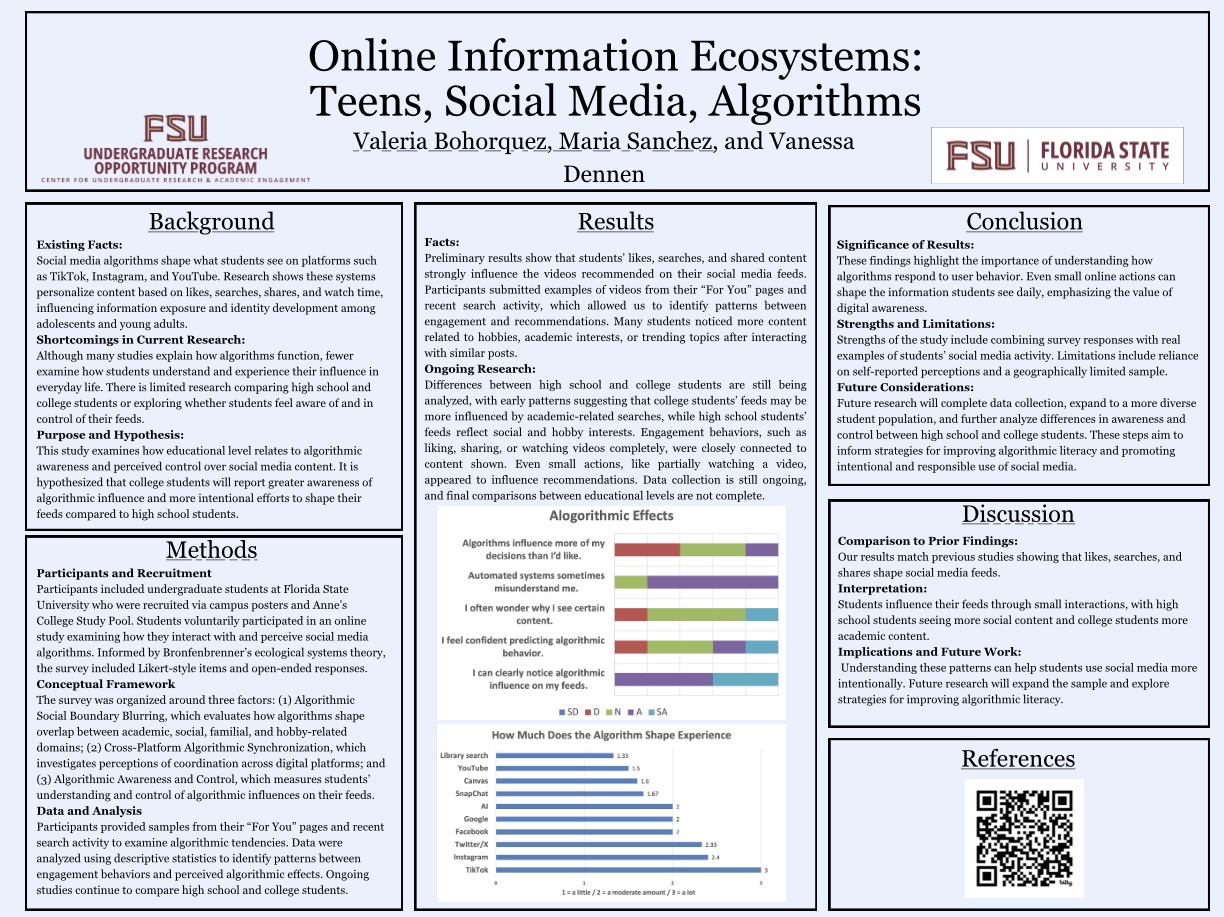
Social media algorithms shape the information adolescents and young adults encounter daily, yet less is known about how students understand and experience this influence. This study examines how educational level relates to algorithmic awareness and perceived control over social media content. Guided by Bronfenbrenner’s ecological systems theory, we hypothesized that college students would report greater awareness of algorithmic influence and more intentional efforts to shape their feeds compared to high school students.
Undergraduate students at Florida State University were recruited through campus posters and Anne’s College Study Pool, with additional data collection ongoing for high school participants. The online survey included Likert-style and open-ended items organized around three factors: Algorithmic Social Boundary Blurring, Cross-Platform Algorithmic Synchronization, and Algorithmic Awareness and Control. Participants also submitted examples from their “For You” pages and recent search activity. Data were analyzed using descriptive statistics to identify patterns between engagement behaviors and recommended content.
Preliminary findings indicate that likes, searches, shares, and watch time strongly influence social media recommendations. Even minor interactions, such as partially watching a video, appeared to shape subsequent content. Early comparisons suggest college students’ feeds reflect more academic-related interests, while high school students’ feeds emphasize social and hobby content. These findings highlight the importance of algorithmic literacy and intentional engagement in shaping students’ online information ecosystems.
Keywords: Algorithms, Social Media, Technology