
Research Symposium
26th annual Undergraduate Research Symposium, April 1, 2026
Molly Stinson Poster Session 2: 10:45 am - 11:45 am / Poster #232
BIO
Molly is a graduating senior from Fayetteville, Georgia, majoring in English Editing, Writing, and Media and Religion with a minor in Art Entrepreneurship. This research project reflects 3 semesters of work towards her Honors in the Major thesis and will grant her the highest distinction of Outstanding Senior Scholar upon graduation in combination with my 4.0 GPA and completion of FSU's Honors Program. Molly's creative writing has been published twice, in FSU's Kudzu Fiction magazine and in SLAB, a national literary magazine. Upon graduation, she will attend law school with the goal of using her Juris Doctor to protect artists’ rights in the era of AI.
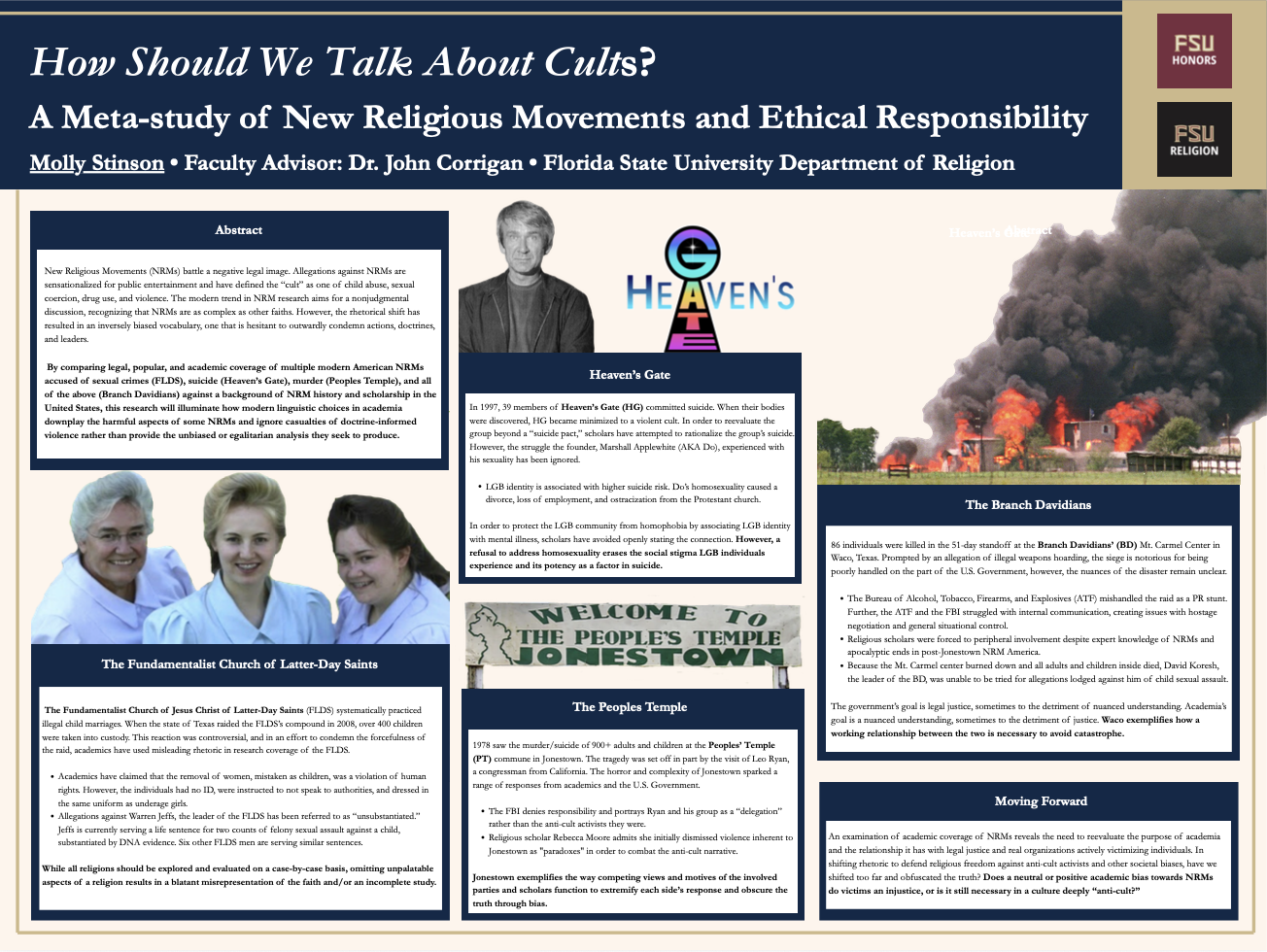
How Should We Talk About Cults? A Meta-study of New Religious Movements and Ethical Responsibility
Authors: Molly Stinson, Dr. John CorriganStudent Major: English EWM, Religion
Mentor: Dr. John Corrigan
Mentor's Department: College of Religon Mentor's College: College of Religion Co-Presenters:
Abstract
Since the study of New Religious Movements (NRMs) took off in America in the 1970s, there has been a steady increase in research in the field. Colloquially known as cults, NRMs battle a consistently negative legal image. Allegations against NRMs are sensationalized for public entertainment and have defined the twenty-first-century “cult” as one of child abuse, sexual coercion, drug use, and violence.
While initial scholarship approached NRMs as perversions of “real” religion, the modern trend in NRM research aims for a nonjudgmental discussion, recognizing that NRMs are as diverse and nuanced as any other religion. However, the vocabulary shifts have resulted in an inversely biased vocabulary, one that obfuscates elements of an NRM in order to downplay their negative aspects. Scholars are hesitant to outwardly condemn actions, doctrines, and leaders affiliated out of fear that they may be interpreted as having an anti-cult bias. The result of this rhetorical shift is an emerging faction of research that inadvertently discredits the very real damage that NRMs, like any other religious movement or institution, have caused.
By comparing legal, popular, and academic coverage of multiple modern American NRMs accused of sexual crimes (FLDS), suicide (Heaven's Gate), murder (Peoples Temple), and all of the above (Branch Davidians) against a background of NRM history and scholarship in the
United States, this research will illuminate how modern linguistic Choices in academia downplay the harmful aspects of some NRMs and ignore casualties of doctrine-informed violence rather than provide the egalitarian analysis they seek to produce.
Keywords: cult, rhetoric, language, ethics