
UROP Project
Deep Learning for Time-Series Forecasting
Deep Learning; Time-Series Forecasting; Artificial Intelligence; Machine Learning; Energy Systems
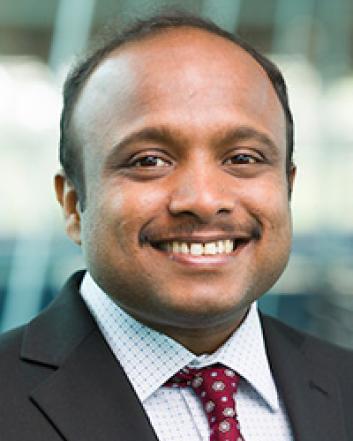
Research Mentor: Dr., Prof. Ravikumar Gelli, He, His, Him
Department, College, Affiliation: Florida State University/ECE Department, FAMU-FSU College of Engineering
Contact Email: rgelli@fsu.edu
Research Assistant Supervisor (if different from mentor):
Research Assistant Supervisor Email:
Faculty Collaborators:
Faculty Collaborators Email:
Department, College, Affiliation: Florida State University/ECE Department, FAMU-FSU College of Engineering
Contact Email: rgelli@fsu.edu
Research Assistant Supervisor (if different from mentor):
Research Assistant Supervisor Email:
Faculty Collaborators:
Faculty Collaborators Email:
Looking for Research Assistants: Yes
Number of Research Assistants: 2
Relevant Majors: Electrical Engineering, Computer Engineering, Computer Science, Data Science, Statistics, Applied Mathematics, or related quantitative disciplines. Students from other majors with an interest in artificial intelligence and data analysis are also encouraged to apply.
Project Location: 2000 Levy Ave, Tallahassee, FL 32310. Center for Advanced Power Systems (CAPS)
Research Assistant Transportation Required: FSU Seminole Express provides service between the FSU main campus and the FAMU-FSU College of Engineering. Remote or In-person: Partially Remote
Approximate Weekly Hours: 5 to 8 hours per week, Flexible schedule (Combination of business and outside of business. TBD between student and research mentor.)
Roundtable Times and Zoom Link:
Number of Research Assistants: 2
Relevant Majors: Electrical Engineering, Computer Engineering, Computer Science, Data Science, Statistics, Applied Mathematics, or related quantitative disciplines. Students from other majors with an interest in artificial intelligence and data analysis are also encouraged to apply.
Project Location: 2000 Levy Ave, Tallahassee, FL 32310. Center for Advanced Power Systems (CAPS)
Research Assistant Transportation Required: FSU Seminole Express provides service between the FSU main campus and the FAMU-FSU College of Engineering. Remote or In-person: Partially Remote
Approximate Weekly Hours: 5 to 8 hours per week, Flexible schedule (Combination of business and outside of business. TBD between student and research mentor.)
Roundtable Times and Zoom Link:
- Day: Tuesday, September 1
Start Time: 12:00
End Time: 1:00
Zoom Link: https://fsu.zoom.us/j/6540925978
Project Description
Many engineering systems generate measurements that change continuously over time. Examples include electricity demand, renewable energy generation, weather conditions, voltage, frequency, equipment measurements, and other sensor data. Being able to predict how these quantities will change in the future is important for planning, operation, resource management, and decision-making.This project will explore how deep-learning methods can be used to forecast future values from historical time-series data. Undergraduate researchers will begin by learning how to visualize and analyze time-series datasets, identify trends and recurring patterns, and understand how past observations can be used to predict future behavior. Students will then develop baseline forecasting approaches and progressively explore deep-learning models for time-series prediction.
Students will work primarily with power and energy system datasets, such as electricity demand or renewable energy generation, while developing broadly applicable skills in Python, data analysis, machine learning, deep learning, and model evaluation.
Prior experience with deep learning, machine learning, forecasting, or electric power systems is not required. The project is designed to provide first-year and early undergraduate students with a structured introduction to computational research.
Research Tasks: 1) Review introductory materials on time-series data, forecasting, and applications in engineering and energy systems.
2) Learn basic Python tools for data analysis, visualization, and machine learning.
3) Explore and visualize historical time-series datasets such as electricity demand, solar generation, wind generation, weather, or other engineering measurements.
4) Identify important characteristics of time-series data, including trends, seasonality, variability, and correlations.
5) Prepare datasets for forecasting by handling missing values, selecting input features, scaling data, and creating appropriate training, validation, and testing sets.
6) Develop simple baseline forecasting models to establish reference performance.
7) Progressively develop and evaluate deep-learning models for time-series forecasting, such as neural networks, recurrent models, or other suitable architectures.
8) Compare forecasting methods using appropriate performance metrics and investigate how factors such as input history, forecast horizon, and data quality affect prediction accuracy.
9) Analyze model errors and identify conditions under which forecasting becomes more difficult.
10) Document the methodology and results and prepare a research poster for the Undergraduate Research Symposium.
Skills that research assistant(s) may need: Required:
-- Interest in artificial intelligence, data analysis, or engineering
-- Willingness to learn programming and computational tools
-- Curiosity about patterns in real-world data
-- Ability to work consistently and communicate progress
-- Willingness to troubleshoot and experiment with different approaches
Recommended but not required:
-- Basic familiarity with Python or another programming language
-- Introductory mathematics or statistics
-- Basic experience working with data or spreadsheets