
UROP Project
Car or Bus? Understanding University Students’ Transportation Choices and Barriers to Public Transit Use
Transportation behavior; public transit; student mobility; parking; sustainability; travel behavior; university policy; behavioral decision-making
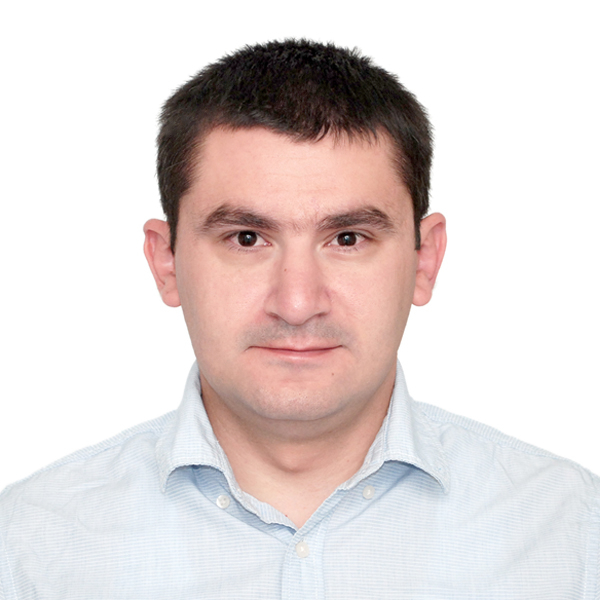
Research Mentor: hbejanyan@fsu.edu Hayk Bejanyan,
Department, College, Affiliation: Askew School of Public Administration and Policy, Social Sciences and Public Policy
Contact Email: hbejanyan@fsu.edu
Research Assistant Supervisor (if different from mentor):
Research Assistant Supervisor Email:
Faculty Collaborators:
Faculty Collaborators Email:
Department, College, Affiliation: Askew School of Public Administration and Policy, Social Sciences and Public Policy
Contact Email: hbejanyan@fsu.edu
Research Assistant Supervisor (if different from mentor):
Research Assistant Supervisor Email:
Faculty Collaborators:
Faculty Collaborators Email:
Looking for Research Assistants: Yes
Number of Research Assistants: 2
Relevant Majors: Open to all majors. Students in Public Administration, Political Science, Economics, Urban and Regional Planning, Geography, Sociology, Psychology, Business, Statistics, or related fields may find the project particularly relevant.
Project Location: On FSU Main Campus
Research Assistant Transportation Required: No, the project is remote Remote or In-person: Partially Remote
Approximate Weekly Hours: 7, Flexible schedule (Combination of business and outside of business. TBD between student and research mentor.)
Roundtable Times and Zoom Link:
Number of Research Assistants: 2
Relevant Majors: Open to all majors. Students in Public Administration, Political Science, Economics, Urban and Regional Planning, Geography, Sociology, Psychology, Business, Statistics, or related fields may find the project particularly relevant.
Project Location: On FSU Main Campus
Research Assistant Transportation Required: No, the project is remote Remote or In-person: Partially Remote
Approximate Weekly Hours: 7, Flexible schedule (Combination of business and outside of business. TBD between student and research mentor.)
Roundtable Times and Zoom Link:
- Day: Monday, August 31
Start Time: 2:00
End Time: 3:00
Zoom Link: https://fsu.zoom.us/j/95674055682 - Day: Wednesday, September 2
Start Time: 12:00
End Time: 1:00
Zoom Link: https://fsu.zoom.us/j/95745511330
Project Description
Transportation is an important component of the university experience, affecting students’ time, expenses, access to campus, parking demand, traffic congestion, and environmental sustainability. Although public transportation provides an alternative to private vehicles, many university students continue to prefer driving to campus.This project seeks to understand the factors that influence students' decisions to drive rather than use bus transportation and to identify changes that could make public transit a more attractive alternative.
The research will examine factors such as travel time, convenience, reliability, flexibility, bus frequency, accessibility of stops, parking availability and cost, safety, comfort, weather, class schedules, and students' perceptions of public transportation. The study will also explore whether students have accurate information about the relative costs and travel times associated with different transportation options.
The project will use a mixed-methods approach combining a review of existing research, student surveys, campus observations, and potentially interviews or focus groups. Students may also compare travel scenarios involving private vehicles and public transportation.
The broader goal is to identify the most important barriers to bus use and develop evidence-based recommendations that universities and transportation providers could consider to encourage more sustainable and efficient student transportation choices.
Research Tasks: Research assistants will participate in several stages of the research process, including:
Conducting a literature review on student transportation behavior, public transit use, and transportation choice.
Helping refine research questions and hypotheses.
Assisting with the development and testing of a student transportation survey.
Recruiting survey participants and collecting data.
Conducting structured observations of transportation patterns at selected campus locations.
Collecting information about transportation alternatives, including estimated travel time, cost, frequency, and accessibility.
Cleaning and organizing survey and observational data.
Conducting descriptive statistical analyses and, depending on the students' interests and skills, introductory regression or choice-model analysis.
Assisting with interpretation of findings.
Developing tables, figures, and visualizations.
Reviewing relevant university transportation policies and practices.
Developing policy recommendations based on the findings.
Preparing an abstract and research poster for the FSU Undergraduate Research Symposium.
Skills that research assistant(s) may need: Required:
Strong interest in research and willingness to learn; reliability and ability to meet agreed deadlines; attention to detail; ability to communicate professionally and work collaboratively; basic familiarity with Microsoft Excel or similar software.
Recommended but not required:
Previous coursework in statistics, research methods, economics, public policy, transportation, sociology, psychology, or related fields. Experience with survey research, Excel, R, Python, SPSS, Stata, GIS, or data visualization would be helpful but is not necessary.
No previous research experience is required. Students will receive guidance on research methods and project-specific tasks.
Mentoring Philosophy
My mentoring approach is based on learning through active participation in the research process. I view undergraduate research as an opportunity for students not only to assist with an existing project but also to develop their own research skills, professional interests, and confidence as researchers.At the beginning of the project, I will work with each research assistant to understand their academic interests, existing skills, and learning goals. Responsibilities will initially be clearly structured, with additional independence provided as students gain experience. Research assistants will participate in different stages of the project, including research design, literature review, data collection, analysis, interpretation, and presentation of findings.
I encourage students to ask questions, challenge assumptions, propose ideas, and take ownership of parts of the project. Mistakes are treated as part of the learning process, provided that students communicate openly and use feedback to improve their work.
We will meet regularly to review progress, discuss challenges, and connect specific research tasks to broader methodological and policy questions. I will also provide feedback on students' analytical, writing, presentation, and research skills. By the end of the project, my goal is for research assistants to understand how an initial real-world problem can be transformed into a research question, investigated systematically, and translated into evidence-based recommendations.
Additional Information
This project is particularly appropriate for students interested in solving practical problems that affect everyday university life. Research assistants will have an opportunity to contribute to a project with direct implications for transportation, parking, sustainability, student experience, and university policy.The project does not require previous expertise in transportation research. Students from different academic backgrounds are encouraged to apply. Research responsibilities may be adjusted according to each student's interests, including quantitative analysis, surveys, behavioral research, policy analysis, data visualization, or transportation planning.
I would also slightly change the conceptual framing from “Why do students prefer driving rather than taking a bus?” to “What explains students' transportation choices, and what would make public transit a viable alternative to driving?”
That is stronger academically because you are not assuming in advance that students prefer driving. You first test whether they do, identify who prefers driving, determine why, and then estimate what could change that behavior. It gives you hypotheses that the UROP students can actually test and makes the project look much more like publishable research.