
UROP Project
Mapping the Premodern Body: A Digital Humanities Study of Medieval and Early Modern Anatomical Knowledge
History, medicine, manuscripts, digital humanities, anatomy
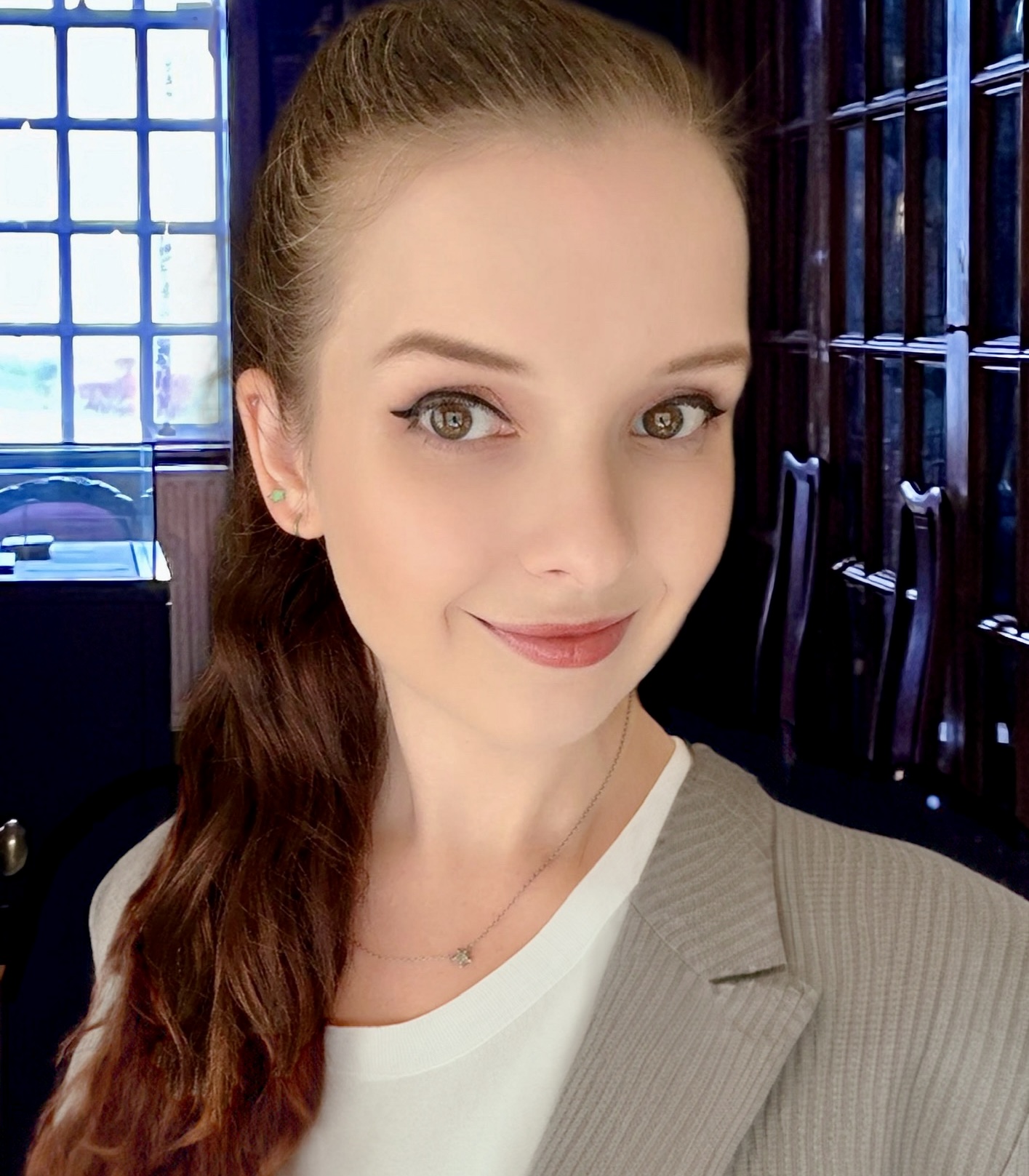
Research Mentor: Baylee Staufenbiel, She/her
Department, College, Affiliation: History, Arts and Sciences
Contact Email: bstaufenbiel@fsu.edu
Research Assistant Supervisor (if different from mentor):
Research Assistant Supervisor Email:
Faculty Collaborators:
Faculty Collaborators Email:
Department, College, Affiliation: History, Arts and Sciences
Contact Email: bstaufenbiel@fsu.edu
Research Assistant Supervisor (if different from mentor):
Research Assistant Supervisor Email:
Faculty Collaborators:
Faculty Collaborators Email:
Looking for Research Assistants: Yes
Number of Research Assistants: 2
Relevant Majors: Open to all majors
Project Location: On FSU Main Campus
Research Assistant Transportation Required: Remote or In-person: Partially Remote
Approximate Weekly Hours: 5-10, Flexible schedule (Combination of business and outside of business. TBD between student and research mentor.)
Roundtable Times and Zoom Link:
Not participating in the roundtable
Number of Research Assistants: 2
Relevant Majors: Open to all majors
Project Location: On FSU Main Campus
Research Assistant Transportation Required: Remote or In-person: Partially Remote
Approximate Weekly Hours: 5-10, Flexible schedule (Combination of business and outside of business. TBD between student and research mentor.)
Roundtable Times and Zoom Link:
Not participating in the roundtable
Project Description
This project looks at how people understood and represented the human body in medieval and early modern Europe. Before modern anatomical textbooks and atlases, information about the body appeared in manuscripts, medical texts, diagrams, illustrations, and early printed books. Many of these materials have now been digitized by libraries and museums, but they are spread across different collections and can be difficult to study together.The goal of this project is to find examples of anatomical texts and images and bring information about them together into a searchable dataset. We will record basic information about each source, such as when and where it was made, by whom, the publisher, author, possible translations and copies, where it is currently held, what parts of the body it represents, what text or image it contains, and how it relates to other examples.
Once we have collected enough material, we can use the dataset to look for patterns. For example: Do certain kinds of anatomical images become more common during particular periods? Do different ways of representing the body appear in different places? Do the same images appear alongside different medical texts? What changes when anatomical information moves from handwritten manuscripts into printed books?
The larger goal is to use digital tools to make connections between historical sources that are now scattered across libraries and collections around the world.
Research Tasks: Students working on this project may:
Search digital libraries, museum collections, manuscript databases, and other online resources for medieval and early modern anatomical texts and images.
Enter information about sources into a shared spreadsheet or database.
Help decide how information should be categorized and recorded.
Find additional information or metadata when needed about manuscripts, books, images, authors, dates, and places.
Learn how to analyze written or printed materials across time, space, and place.
Depending on interest and experience, create maps, timelines, charts, visualizations, or other ways of presenting data.
Learn how historians evaluate incomplete or uncertain evidence and how those uncertainties can be represented accurately in a digital dataset.
Students will not be expected to arrive knowing how to work with medieval manuscripts or historical medical texts. Training will be provided, and tasks can be divided according to students’ interests and strengths. Students will have the opportunity to pursue a smaller questions of their own using material gathered by the team.
Skills that research assistant(s) may need: Required:
Ability to use a computer and learn how to enter and organize information in a spreadsheet or similar format.
Attention to detail.
Willingness to learn unfamiliar material and ask questions.
Ability to follow an agreed system for recording information.
Ability to work independently and as part of a research team.
Recommended but not required:
No particular major or academic background is required. Students in history, computer science, information technology, data science, biology, pre-medical fields, art history, classics, languages, or other areas may all be a good fit for the project.
Experience with spreadsheets, databases, coding, data visualization, digital humanities, historical research, languages, or medieval and early modern history is welcome but not required.
Students are not expected to have all of these skills. Different students may contribute different strengths to the team. For example, a student with a history background may help interpret historical sources while a student with a computing background could help determine how information can efficiently be organized and analyzed digitally. Students will learn from one another as well as from the mentor.
Mentoring Philosophy
My goal as a mentor is to help students become comfortable with the process of research, including the fact that research often involves uncertainty, experimentation, and learning new skills along the way. I do not expect students to begin the project already knowing how to work with historical sources, digital humanities methods, or specialized research tools. These skills can be learned through the project.At the beginning, I will provide precise instructions, examples, and smaller tasks so that students can become familiar with the sources and methods we are using. As they gain experience, students will have more opportunities to direct parts of the project. I encourage students to ask questions, especially when they encounter information that is unclear or does not fit neatly into the categories we have created. Recognizing and grappling with uncertainty is an important part of all research.
I also want students to contribute the knowledge and skills they already have. Because this is an interdisciplinary project, students may approach the material from very different backgrounds. A historian, computer science student, biology student, or art history student may notice different problems and possibilities in the same corpus. I want students to learn from each other and recognize interdisciplinary in even small things like data analysis.
Ultimately, I want students to leave the project understanding how historical research works. I want them to develop practical research skills and make an identifiable intellectual contribution to a digital project that has real world benefits for researchers.
Additional Information
Many of the manuscripts that the students will encounter are in various languages, such as Latin, French, Italian, Old English German, etc.Many are also handwritten and require paleography to read them. I don’t expect students to be able to actually read the manuscripts or the early books themselves. What they will need to be able to read is the library or museum databases that have already been established.