
UROP Project
Science Prediction Market
experiment, hypothesis, biology, chemistry, economics
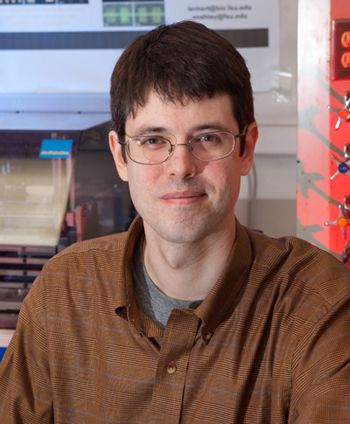
Research Mentor: Steven Lenhert,
Department, College, Affiliation: Biological Science, Arts and Sciences
Contact Email: lenhert@bio.fsu.edu
Research Assistant Supervisor (if different from mentor):
Research Assistant Supervisor Email:
Faculty Collaborators:
Faculty Collaborators Email:
Department, College, Affiliation: Biological Science, Arts and Sciences
Contact Email: lenhert@bio.fsu.edu
Research Assistant Supervisor (if different from mentor):
Research Assistant Supervisor Email:
Faculty Collaborators:
Faculty Collaborators Email:
Looking for Research Assistants: Yes
Number of Research Assistants: 2
Relevant Majors: Open to all majors
Project Location: On FSU Main Campus
Research Assistant Transportation Required: Remote or In-person: Partially Remote
Approximate Weekly Hours: 8, Flexible schedule (Combination of business and outside of business. TBD between student and research mentor.)
Roundtable Times and Zoom Link:
Number of Research Assistants: 2
Relevant Majors: Open to all majors
Project Location: On FSU Main Campus
Research Assistant Transportation Required: Remote or In-person: Partially Remote
Approximate Weekly Hours: 8, Flexible schedule (Combination of business and outside of business. TBD between student and research mentor.)
Roundtable Times and Zoom Link:
- Day: Monday, August 31
Start Time: 2:00
End Time: 2:30
Zoom Link: https://fsu.zoom.us/j/92271342903
Project Description
What is the difference between a good and bad science experiment? This is a question that was thoroughly answered by Karl Popper in the early 20th century. He came to the now widely accepted conclusion that good science involves falsifiable hypotheses, while pseudoscience is unfalsifiable. Popper explained the reason for this rule nicely in an article entitled, "Science as Falsification”.1 Briefly, the idea is that science should answer questions to which we do not already know the answer. Theories and hypothesis that have a chance to be proven wrong through experimental observation are therefore valuable contributions to our advancement of knowledge, while theories and hypotheses that have no risk of being wrong do not increase knowledge. This “demarcation line” so nicely distinguishes science from pseudoscience, that I propose to take it one step further – can we quantify the amount of knowledge gained by an experiment by making predictions and measuring how much of a chance it is perceived to have of falsifying a hypothesis? Furthermore, the predictive value of completed science is what makes technology possible.This project will set up a new kind of scientific evaluation system.2 A scientist can propose a scientific question, hypothesis, and experiment to test the hypothesis. That scientist can provide possible outcomes of the experiment, along with proposed probabilities for each outcome. Reviewers can then predict the outcomes and wager points to indicate their level of confidence. The value of the knowledge to be gained by the experiment can then be gauged by how much wagering takes place, as well as what the odds are for different outcomes. Presentation of published experiments and results in this format can allow students to experience the scientific process of discovery and develop their scientific prediction skills.
References:
1 Science as Falsification, by Karl Popper
https://staff.washington.edu/lynnhank/Popper-1.pdf
2 Science Prediction Market
https://www.bio.fsu.edu/lenhertgroup/prediction_market.php
Research Tasks: The students will set up a prediction market using points within the Lenhert group and other interested students and researchers. Experiments from the scientific literature that are perceived to be relevant to current projects in the group will be identified. The experiments will be presented to the group without providing the results. Other group members will predict the outcome of the experiments and express their confidence in the outcomes using points. The market will be extended to real experiments in the Lenhert lab as well as other labs.
Skills that research assistant(s) may need: Required: Critical thinking; communication; basic understanding of science
Recommended: STEM, physics, chemistry, biology, finance, economics, business