
UROP Project
MFA Thesis: Memory, Material, and the Changing Body
Ceramics, Sculpture, Memory, Disability, Materiality, Feminism
Research Mentor: lc25h@fsu.edu Libby Couch, she/her
Department, College, Affiliation: Fine Art, Fine Arts
Contact Email: lc25h@fsu.edu
Research Assistant Supervisor (if different from mentor): she/her
Research Assistant Supervisor Email:
Faculty Collaborators:
Faculty Collaborators Email:
Department, College, Affiliation: Fine Art, Fine Arts
Contact Email: lc25h@fsu.edu
Research Assistant Supervisor (if different from mentor): she/her
Research Assistant Supervisor Email:
Faculty Collaborators:
Faculty Collaborators Email:
Looking for Research Assistants: Yes
Number of Research Assistants: 2
Relevant Majors: Fine Arts preferred, but open to all majors. Ceramic experience preferred
Project Location: On FSU Main Campus
Research Assistant Transportation Required: There are buses from the main campus to the Carnaghi Art Building Remote or In-person: In-person
Approximate Weekly Hours: 5, Flexible schedule (Combination of business and outside of business. TBD between student and research mentor.)
Roundtable Times and Zoom Link:
Number of Research Assistants: 2
Relevant Majors: Fine Arts preferred, but open to all majors. Ceramic experience preferred
Project Location: On FSU Main Campus
Research Assistant Transportation Required: There are buses from the main campus to the Carnaghi Art Building Remote or In-person: In-person
Approximate Weekly Hours: 5, Flexible schedule (Combination of business and outside of business. TBD between student and research mentor.)
Roundtable Times and Zoom Link:
- Day: Friday, September 4
Start Time: 7:00
End Time: 8:00
Zoom Link: Reschedule - Day: Wednesday, September 2
Start Time: 7:00
End Time: 7:30
Zoom Link: https://us06web.zoom.us/j/85417426635?pwd=E7WIIzmvwaooBxVRUwvdNga7UyHDYb.1 - Day: Wednesday, September 2
Start Time: 7:30
End Time: 8:00
Zoom Link: https://us06web.zoom.us/j/85417426635?pwd=E7WIIzmvwaooBxVRUwvdNga7UyHDYb.1 - Day: Wednesday, September 2
Start Time: 5:30
End Time: 6:00
Zoom Link: https://us06web.zoom.us/j/85417426635?pwd=E7WIIzmvwaooBxVRUwvdNga7UyHDYb.1
Project Description
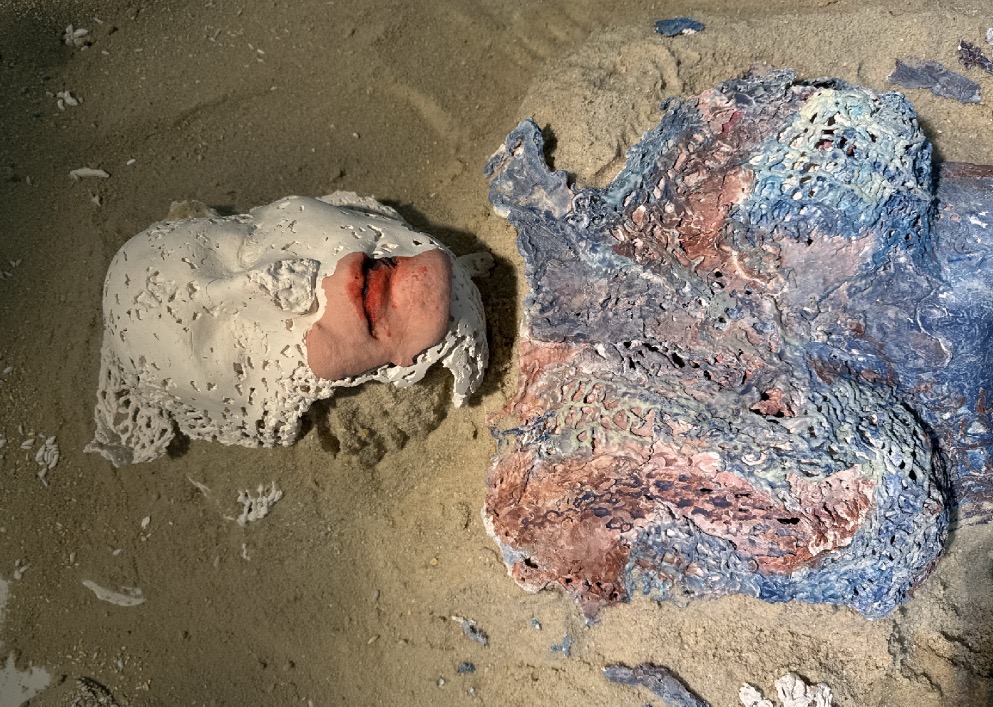
This project is part of my ongoing MFA thesis research in Studio Art at Florida State University. The project investigates the relationship between embodied experience, memory, and the ways bodies are understood, perceived, and remembered. Drawing from research on mood-congruent memory and feminist approaches to embodiment, I will explore how the conditions of the present body influence what can be remembered and how bodily experiences are shaped by cultural expectations and perceptions of the body. Through ceramic reflecting pools, cast forms, glaze experimentation, printmaking, and decals, I investigate how material processes can evoke the instability, distortion, and incomplete accessibility of memory. I am also using 3D scanning to capture faces and ecological formations and translating these scans into clay forms, exploring how digital representations of bodies and landscapes can become physical objects. An undergraduate research assistant will contribute to scholarly and artist research, systematic material testing, documentation, and the development of an organized research archive.Research Tasks: Test ceramic materials and glazes (This involves learning to apply glaze to ceramic pieces and firing them in a kiln.)
Assist with art studio fabrication, installation, and documentation
Research medical journals and scholarly publications pertaining to thesis research
Skills that research assistant(s) may need: Required:
Strong attention to detail and organization
Willingness to conduct research and read academic or artist-written sources
Ability to document and organize research findings
Recommended:
Interest or experience in studio art, ceramics, sculpture, photography, art history, psychology, disability studies, or related fields
Chemistry or geography background may help with glaze testing, but is not required.
Experience with academic research and summarizing sources
Mentoring Philosophy
I approach mentoring as a collaborative process built on curiosity, communication, and mutual respect. My goal is for the research assistant to develop an understanding of what studio-based research can look like while also identifying their own interests and strengths within the project.I previously taught high school ceramics for three years, and my background in education has taught me the importance of meeting students where they are, providing appropriate support, and gradually encouraging greater independence. I want the research assistant to feel comfortable asking questions, proposing ideas, and taking intellectual and creative risks as they develop their research skills.
I believe that experimentation, revision, and failure are essential parts of both creative research and a growth-oriented learning process. In the studio, an unsuccessful material test can be just as informative as a successful one because it provides evidence about what does not work and can lead to new questions, approaches, and discoveries. I want to create an environment where students understand that mistakes are not evidence of failure as a researcher or artist, but opportunities to evaluate, adapt, and continue learning.
I want the student to leave the experience with more than knowledge of ceramics or contemporary art. I want them to understand how artists use research, experimentation, observation, and reflection to develop ideas, and to feel confident applying those methods to their own academic and creative work.