
UROP Project
Preconditioned Machine Learning Algorithm for Variational Problems in Scientific Computing
Partial Differential Equations; Variational Problem; Deep Learning; Neural Networks; Optimization; Python
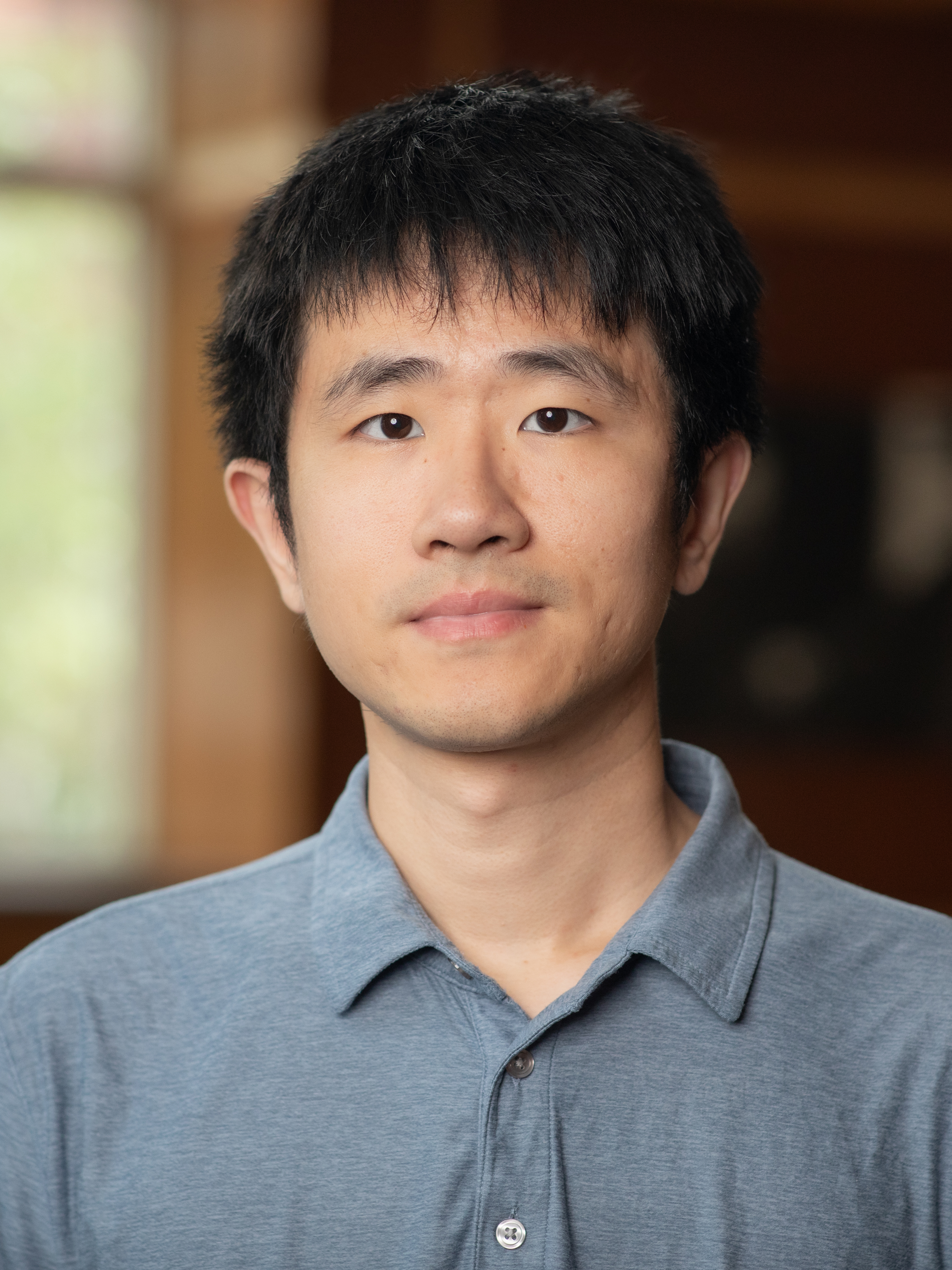
Research Mentor: Mr. Shu Liu, He/Him
Department, College, Affiliation: Department of Mathematics (Applied & Computational Mathematics), Arts and Sciences
Contact Email: sl25bn@fsu.edu
Research Assistant Supervisor (if different from mentor):
Research Assistant Supervisor Email:
Faculty Collaborators:
Faculty Collaborators Email:
Department, College, Affiliation: Department of Mathematics (Applied & Computational Mathematics), Arts and Sciences
Contact Email: sl25bn@fsu.edu
Research Assistant Supervisor (if different from mentor):
Research Assistant Supervisor Email:
Faculty Collaborators:
Faculty Collaborators Email:
Looking for Research Assistants: Yes
Number of Research Assistants: 1
Relevant Majors: Mathematics, Applied & Computational Mathematics, Computer Science, Statistics, Physics, or any STEM major with an interest in programming.
Project Location: On FSU Main Campus
Research Assistant Transportation Required: Remote or In-person: Partially Remote
Approximate Weekly Hours: 5-7 hours per week , Flexible schedule (Combination of business and outside of business. TBD between student and research mentor.)
Roundtable Times and Zoom Link:
Not participating in the roundtable
Number of Research Assistants: 1
Relevant Majors: Mathematics, Applied & Computational Mathematics, Computer Science, Statistics, Physics, or any STEM major with an interest in programming.
Project Location: On FSU Main Campus
Research Assistant Transportation Required: Remote or In-person: Partially Remote
Approximate Weekly Hours: 5-7 hours per week , Flexible schedule (Combination of business and outside of business. TBD between student and research mentor.)
Roundtable Times and Zoom Link:
Not participating in the roundtable
Project Description
Many important problems in science, engineering, and finance can be formulated as variational problems involving partial differential equations (PDEs)—that is, finding functions that minimize an energy or objective functional. Variational problems arise widely in materials science, quantum mechanics, optimal control, fluid dynamics, and engineering. When these problems involve many variables, classical numerical methods can become prohibitively expensive due to the “curse of dimensionality.” A promising alternative is to represent the unknown function using neural network surrogation and solve the variational problem by optimizing neural network parameters. This project develops effective preconditioned optimization methods that make neural-network approaches more accurate, efficient, and reliable for high-dimensional PDE variational problems. The key idea is to design optimization algorithms that exploit the geometry of the underlying variational objective, resulting in a better-conditioned loss landscape and more stable training.The UROP research assistant will contribute primarily on the computational side: learning the basics of variational formulations of PDEs and neural-network solvers, implementing and running benchmark experiments, visualizing and comparing different optimization strategies on test problems of varying dimensions. No prior research experience is required.
Research Tasks: All the tasks can be done remotely if the student has access to a computer. The tasks that a student can make vary depending on the background and interest of the student. The main goals include:
1. Guided literature review: read accessible introductions to deep-learning-based PDE solvers and know how these solvers work.
2. Develop preconditioned optimization algorithm that enhance the performance of the deep variational problem solvers.
3. Implement Python codes and test benchmark experiments on target equations. Make comprehensive comparison with existing approaches in solvers’ accuracy, computing time and memory consumption.
Skills that research assistant(s) may need: Required:
1. Calculus I–III and basic mathematical reasoning.
2. Some programming experience in any language, and willingness to learn Python.
3. Curiosity, reliability, and willingness to commit 5-7 hours per week.
Recommended (not required)
1. Linear algebra; Exposure to differential equations.
2. Python with NumPy/Matplotlib; any exposure to PyTorch or machine learning.
Mentoring Philosophy
My goal is for the student to experience the full arc of computational research — from reading and understanding a method, to implementing and testing it, to communicating the results. The first semester is deliberately scaffolded: the student begins with a curated reading list and hands-on Python/PyTorch tutorials, then reproduces one small benchmark experiment end-to-end. In the spring, the student takes ownership of a well-defined mini-project whose results feed directly into the group's ongoing research.I will meet with the student biweekly for progress discussions. During these meetings, the student is expected to present progress in the project, discuss any encountered difficulties, and establish objectives for the upcoming weeks. Between meetings we communicate over emails. The student will have access to the group's GPU computing resources, and strong contributions may lead to co-authorship on a publication or to a subsequent honors thesis. Above all, I aim to create an environment where questions are encouraged, mistakes are treated as part of learning, and the student finishes the year with concrete skills in scientific machine learning.