
UROP Project
Supporting the Child Welfare Workforce: Evaluation of a Multi-Part Well-Being Initiative
Child Welfare, Workforce Well-Being, Somatic Regulation, Mindfulness, Program Evaluation
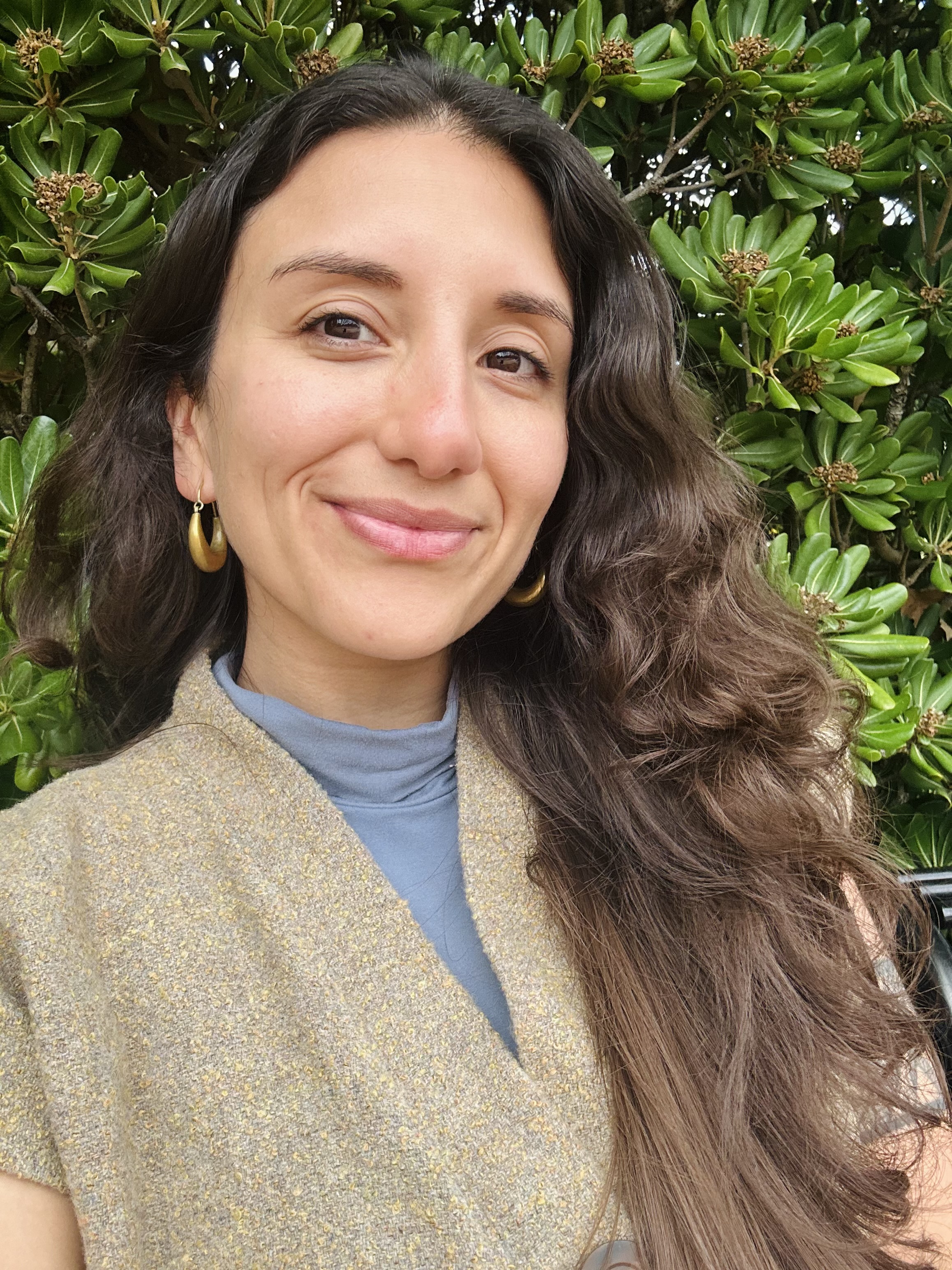
Research Mentor: Kristine Posada, she/her/hers
Department, College, Affiliation: The Florida Institute for Child Welfare, Social Work
Contact Email: kposada@fsu.edu
Research Assistant Supervisor (if different from mentor):
Research Assistant Supervisor Email:
Faculty Collaborators:
Faculty Collaborators Email:
Department, College, Affiliation: The Florida Institute for Child Welfare, Social Work
Contact Email: kposada@fsu.edu
Research Assistant Supervisor (if different from mentor):
Research Assistant Supervisor Email:
Faculty Collaborators:
Faculty Collaborators Email:
Looking for Research Assistants: Yes
Number of Research Assistants: 1
Relevant Majors: This project may be of interest to students in social work, public health, psychology, behavioral health, nursing, human development and family science, or related fields who are interested in learning more about the experiences and well-being needs of frontline professionals and how research can inform practical workforce supports.
Project Location: The Florida Institute for Child Welfare: 2139 Maryland Circle Suite 1100, Tallahassee, FL 32303
Research Assistant Transportation Required: No, the project is remote Remote or In-person: Fully Remote
Approximate Weekly Hours: 5-10, Flexible schedule (Combination of business and outside of business. TBD between student and research mentor.)
Roundtable Times and Zoom Link:
Number of Research Assistants: 1
Relevant Majors: This project may be of interest to students in social work, public health, psychology, behavioral health, nursing, human development and family science, or related fields who are interested in learning more about the experiences and well-being needs of frontline professionals and how research can inform practical workforce supports.
Project Location: The Florida Institute for Child Welfare: 2139 Maryland Circle Suite 1100, Tallahassee, FL 32303
Research Assistant Transportation Required: No, the project is remote Remote or In-person: Fully Remote
Approximate Weekly Hours: 5-10, Flexible schedule (Combination of business and outside of business. TBD between student and research mentor.)
Roundtable Times and Zoom Link:
- Day: Friday, September 4
Start Time: 1:00
End Time: 1:30
Zoom Link: https://fsu.zoom.us/j/3670919645 - Day: Friday, September 4
Start Time: 3:00
End Time: 3:30
Zoom Link: https://fsu.zoom.us/j/3670919645 - Day: Friday, September 4
Start Time: 3:00
End Time: 3:30
Zoom Link: https://fsu.zoom.us/rec/share/VyuIDhO1-k-ftWayWjr3zgdvg4O53ykhyFgqXa470E5Gws2EIFiBX5NANRGoM7Ns.7zEPHQmpy1AExA6H?startTime=1788548551000
Project Description
The Florida Institute for Child Welfare is partnering with a Florida child welfare organization to implement and evaluate a three-part workforce well-being initiative designed to support child welfare professionals within the realities of their day-to-day work. Child welfare professionals routinely work with children and families experiencing trauma, crisis, and complex needs while also navigating high workloads, time pressures, difficult conversations, and high-stakes decision making. These demands can contribute to chronic stress, burnout, secondary traumatic stress, and other challenges to workforce well-being.The initiative will include three interconnected areas of workforce support: somatic regulation, resilient practice with peer support, and mindfulness-based well-being. The experiences are designed to build on one another while offering practical strategies and resources that can be integrated into the realities of child welfare work.
This work builds on Regulation in Real Time, a somatic-based training that our research team piloted with child welfare professionals across three Florida circuits in Spring 2026. The training combines education about stress and nervous system responses with brief practices such as grounding, breathing, and movement. A mixed-method evaluation assessed the acceptability, appropriateness, usability, and feasibility of the training and gathered feedback about participants’ experiences using the practices in their day-to-day work. Findings from the pilot are being used to refine Regulation in Real Time as it becomes one component of the larger well-being initiative.
The broader implementation will provide an opportunity to better understand how different workforce well-being supports are experienced within a child welfare organization, how participants use the practices over time, and what we can learn to inform future implementation. There is still limited research on somatic and other well-being approaches developed specifically for child welfare professionals, particularly approaches designed to be practical within the demands and constraints of frontline work.
The UROP student will be mentored by Kristine Posada, MSW, Assistant in Research Faculty at the Florida Institute for Child Welfare. Her work centers on applied child welfare research and evaluation, with a particular interest in the experiences and well-being of frontline professionals and in how research can be used to develop supports that are practical, thoughtful, and responsive to the realities of their work.
This project may be of interest to students in social work, public health, psychology, behavioral health, nursing, human development and family science, or related fields who are interested in learning more about the experiences and well-being needs of frontline professionals and how research can inform practical workforce supports.
Research Tasks: The research assistant may assist with interviews or focus groups, transcript coding, qualitative data organization, and other research or program coordination activities related to the workforce well-being evaluation. Specific tasks may vary based on the stage of the evaluation and the student’s skills and interests.
Skills that research assistant(s) may need: - Strong organization and attention to detail: Required
- Ability to follow instructions, work independently, and ask questions when needed: Required
- Ability to handle sensitive research information with professionalism and confidentiality: Required
- Interest in child welfare, workforce well-being, social work, behavioral health, or related areas: Recommended
- Experience conducting literature searches or literature reviews: Recommended
- Previous coursework or experience with qualitative or mixed-methods research: Recommended, but not required
- Interview and focus group procedures: Training will be provided
- Qualitative transcript coding and data organization: Training will be provided
- Research data management and project documentation: Training will be provided
- Research software used by the project: Training will be provided as needed
Mentoring Philosophy
My approach to mentoring is grounded in relationship, participation, curiosity, and clear and compassionate communication. I want students to feel respected, comfortable asking questions, and meaningfully involved in the research process while understanding how their contributions connect to the larger goals of the work.Creating space for curiosity and critical reflection is also important. Research does not happen outside of context, and I value conversations that invite students to think about the assumptions we bring to our work, whose perspectives are represented, how systems and environments shape people’s experiences, and how research can remain responsive to the communities and professionals it is intended to serve.
Mentoring is something I try to approach with the individual in mind. Students bring different interests, strengths, experiences, and areas of curiosity, and I want those differences to help shape the experience. Clear expectations and thoughtful feedback can provide a foundation for learning, while still leaving room for students to explore areas of the research that genuinely interest them.
Ultimately, I hope students leave the experience with greater confidence in themselves, stronger critical thinking skills, and a deeper understanding of how their interests and contributions can connect to research that matters to them and to the communities we work alongside.
Additional Information
Our team is also actively disseminating findings from this work. We presented findings from the Regulation in Real Time pilot at the 2026 Florida Coalition for Children Conference, and a related manuscript has been submitted for publication and is currently under review. We hope to continue sharing findings through conference presentations and other dissemination opportunities in 2027.Below is the recording link for the roundtable from 9/4
https://fsu.zoom.us/rec/share/VyuIDhO1-k-ftWayWjr3zgdvg4O53ykhyFgqXa470E5Gws2EIFiBX5NANRGoM7Ns.7zEPHQmpy1AExA6H?startTime=1788548551000