
UROP Project
Social Media, Influencers, and Rural Life
Social media, rural representation, influencers, digital media, sustainability
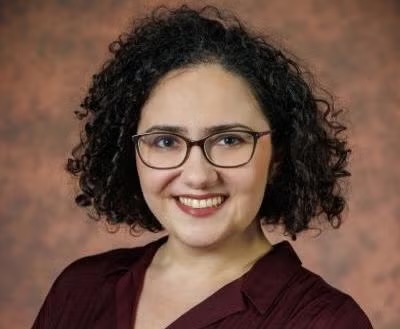
Research Mentor: Dr. Burge Abiral, She/her/hers
Department, College, Affiliation: Anthropology, Arts and Sciences
Contact Email: burge.abiral@fsu.edu
Research Assistant Supervisor (if different from mentor):
Research Assistant Supervisor Email:
Faculty Collaborators:
Faculty Collaborators Email:
Department, College, Affiliation: Anthropology, Arts and Sciences
Contact Email: burge.abiral@fsu.edu
Research Assistant Supervisor (if different from mentor):
Research Assistant Supervisor Email:
Faculty Collaborators:
Faculty Collaborators Email:
Looking for Research Assistants: Yes
Number of Research Assistants: 3
Relevant Majors: Open to all majors.
Project Location: On FSU Main Campus
Research Assistant Transportation Required: Remote or In-person: Partially Remote
Approximate Weekly Hours: 8, Flexible schedule (Combination of business and outside of business. TBD between student and research mentor.)
Roundtable Times and Zoom Link:
Number of Research Assistants: 3
Relevant Majors: Open to all majors.
Project Location: On FSU Main Campus
Research Assistant Transportation Required: Remote or In-person: Partially Remote
Approximate Weekly Hours: 8, Flexible schedule (Combination of business and outside of business. TBD between student and research mentor.)
Roundtable Times and Zoom Link:
- Day: Monday, August 31
Start Time: 12:00
End Time: 2:00
Zoom Link: https://fsu.zoom.us/j/93974159075 - Day: Friday, September 4
Start Time: 2:00
End Time: 4:00
Zoom Link: https://fsu.zoom.us/j/93974159075
Project Description
Social media is full of images of rural life: people baking bread, tending gardens, raising animals, living “simply” and “sustainably” off the land. These images circulate widely and shape how millions of people think about nature, agriculture, and what a good life looks like. But whose version of rural life gets represented, and whose gets left out? What happens when a lifestyle becomes an aesthetic, something to be curated, consumed, and sold?This project investigates how rural and agricultural life is represented on social media, and what those representations reveal about broader cultural anxieties around sustainability, gender, and the relationship between nature and capitalism. Research assistants will help build the scholarly foundation for this project by mapping and synthesizing English-language academic literature at the intersection of digital media studies, environmental humanities, and cultural anthropology. They will also conduct close analysis of a small number of English-language accounts, learning to read digital self-representation as cultural material.
Students with an interest in digital methods will also have the opportunity to explore the technical and ethical dimensions of social media data collection, investigating what tools exist for gathering publicly available content at scale, what their limitations are, and what responsible data collection looks like in practice. This is an exploratory component aimed at building methodological awareness.
The literature and methods groundwork students develop will directly inform an ongoing collaborative research project on social media representations of rural life and agroecological movements.
Research Tasks: Students will work on two core tasks, with an optional third for those with technical interests:
1. Annotated bibliography and literature mapping
Students will identify, read, and annotate academic sources across a set of defined themes relevant to the project. These themes include: influencer culture and the commodification of lifestyle; digital representations of rurality, nature, and sustainability; pastoral aesthetics and their cultural politics; gender and labor in alternative food and back-to-the-land movements; and social media as a site of environmental discourse. The goal is to find sources, to understand what conversations are happening across media studies, environmental humanities, cultural anthropology, and geography, and to see how those conversations might speak to each other. Students will produce structured annotation entries that summarize each source’s argument, note its disciplinary location, and flag connections to other sources and to the project’s core questions.
2. Close analysis of accounts and synthesis
Students will conduct sustained close analysis of two or three English-language social media accounts that represent rural, agricultural, or “simple living” lifestyles, attending throughout to the ethics of studying public social media content. Working from a shared set of analytical prompts, students will attend to how these accounts construct rural life, i.e., what is shown and what is left out, how labor appears or disappears, how gender is performed, what kind of viewer the content addresses, and how audience responses circulate meanings back.
Students will then bring this material into conversation with the scholarship they have assembled, producing short synthesis memos of 3-5 pages. For example: how do scholars currently understand the relationship between social media aesthetics and environmental politics, and does that framework capture what these accounts are actually doing? What does the literature say about gender and the rural imaginary, and where does it fall short?
3. Digital methods exploration (for interested students with technical inclination)
Students interested in digital methods will survey what tools currently exist for collecting publicly available social media content at scale, including posts, captions, and comments. This involves comparing available scraping and data collection tools, understanding their technical requirements, costs, and platform-specific limitations, and assessing how well each tool fits a small-scale academic project. The deliverable is a methodological memo: a clear-eyed comparison of what is currently feasible and what tradeoffs each option involves.
Skills that research assistant(s) may need: Strong reading and writing skills: required
Ability to engage with academic texts and summarize arguments accurately: required
Interest in or familiarity with social media platforms: recommended
Curiosity about digital media, environmental politics, or cultural representation: recommended
Familiarity with academic databases (JSTOR, Google Scholar): helpful, and can be taught
Basic technical literacy or interest in digital methods: recommended for students interested in Task 3
Mentoring Philosophy
I begin mentoring by meeting students where they are. First- and second-year students rarely have research experience, and my job is to build it through small, concrete steps that gradually develop competence and confidence in their own thinking. Three commitments follow from this.1. Scaffolding: I structure research tasks so that each is achievable while building toward something larger. A student who has never read an academic article learns first to identify its argument, then to situate it among others, then to see what a body of scholarship does and doesn’t address.
2. Ownership: I begin by asking what each student hopes to get from the experience, and shape their work accordingly. I provide structure and guidance, but within that structure I expect students to make decisions, pursue their own hunches, and bring their curiosity to the work, which becomes easier as their confidence grows. I treat students as junior researchers developing their capacity to ask questions.
3. Collaboration: My research assistants meet regularly as a group, not only with me, so that they learn to think alongside peers and challenge each other’s readings. This co-learning is central to how I teach and work.
Throughout, I give direct, specific feedback and share my own thinking openly, including its uncertainties. Good research involves not knowing, getting stuck, and revising, and students should feel comfortable saying “I don’t understand this yet.” Ultimately, I want them to leave this experience with a sense of what it means to think carefully about the world.