
UROP Project
Mapping the Local Food System: An Ethnographic Approach to Food and Community in Tallahassee
Food systems, Tallahassee, ethnography, sustainability, community research
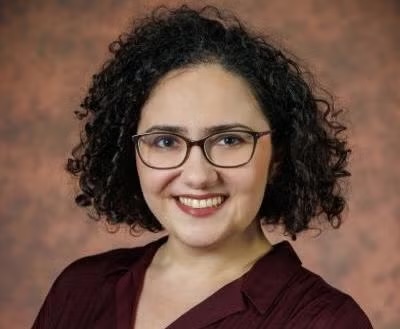
Research Mentor: Dr. Burge Abiral, She/her/hers
Department, College, Affiliation: Anthropology, Arts and Sciences
Contact Email: ba25h@fsu.edu
Research Assistant Supervisor (if different from mentor):
Research Assistant Supervisor Email:
Faculty Collaborators:
Faculty Collaborators Email:
Department, College, Affiliation: Anthropology, Arts and Sciences
Contact Email: ba25h@fsu.edu
Research Assistant Supervisor (if different from mentor):
Research Assistant Supervisor Email:
Faculty Collaborators:
Faculty Collaborators Email:
Looking for Research Assistants: Yes
Number of Research Assistants: 3
Relevant Majors: Open to all majors
Project Location: On FSU Main Campus
Research Assistant Transportation Required: Remote or In-person: Partially Remote
Approximate Weekly Hours: 8, Flexible schedule (Combination of business and outside of business. TBD between student and research mentor.)
Roundtable Times and Zoom Link:
Number of Research Assistants: 3
Relevant Majors: Open to all majors
Project Location: On FSU Main Campus
Research Assistant Transportation Required: Remote or In-person: Partially Remote
Approximate Weekly Hours: 8, Flexible schedule (Combination of business and outside of business. TBD between student and research mentor.)
Roundtable Times and Zoom Link:
- Day: Monday, August 31
Start Time: 12:00
End Time: 2:00
Zoom Link: https://fsu.zoom.us/j/93974159075 - Day: Friday, September 4
Start Time: 2:00
End Time: 4:00
Zoom Link: https://fsu.zoom.us/j/93974159075
Project Description
This project investigates how food is produced, distributed, and made meaningful in Tallahassee and the surrounding North Florida region. By focusing on the local food system, this research asks how farmers, nonprofits, policy organizations, food banks, and community gardens understand food-related problems differently, and what values and assumptions underlie those differences. Why does one organization talk about “food insecurity” while another talks about “food sovereignty”? What does “local” or “sustainable” mean to a small farmer versus a food policy council? These differences reflect different theories of what the problem is, who is responsible, and what a solution would look like.This project builds the empirical and analytical foundation for a future undergraduate course on food systems. Research assistants will learn to map and describe the food system, and to read it as a site where social, economic, and political questions play out in everyday life. In doing so, they will gain hands-on experience in core skills of anthropological and qualitative social science research: close reading, interpretive analysis, organizational research, and, for interested students, introductory interviewing.
No prior research experience is required. Curiosity, attention to detail, and a willingness to look carefully at things that might initially seem straightforward matter most.
Research Tasks: Students will work on four interconnected tasks, moving from foundational mapping to interpretive analysis:
1. Food system mapping
Students will identify and catalogue key actors across the Tallahassee food system, including producers, distributors, emergency food providers, community organizations, and policy bodies. This produces a working database that the whole team contributes to and shares, which is a map of who is doing what, for whom, and with what stated goals.
2. Close reading of organizational materials
Students will analyze the public-facing materials of a selection of organizations, including websites, social media, annual reports, and mission statements, paying close attention to language and framing. How does each organization define the food problem? Who do they identify as responsible? Who do they speak for, and who remains invisible in their account? Students will produce short interpretive memos guided by structured prompts provided by the faculty mentor.
3. Comparative analysis
Students will bring their individual close readings into conversation with each other, identifying patterns, tensions, and silences across the food system. Where do different actors share assumptions? Where do their framings conflict? This stage emphasizes collaborative thinking and is structured around regular group meetings with the faculty mentor.
4. Introductory interviews (for interested students)
Students who are interested may conduct short, focused interviews with representatives from one or two organizations, asking how they define key problems and who they see as allies or obstacles in the food system. This component is optional and will be pursued with appropriate preparation and Human Subjects Research training.
Skills that research assistant(s) may need: Strong reading and writing skills: required
Curiosity and comfort with interpretive, open-ended questions: required
Familiarity with qualitative or social science research: helpful
Basic comfort with online research and document analysis: helpful
Mentoring Philosophy
I begin mentoring by meeting students where they are. First- and second-year students rarely have research experience, and my job is to build it through small, concrete steps that gradually develop competence and confidence in their own thinking. Three commitments follow from this.1. Scaffolding: I structure research tasks so that each is achievable while building toward something larger. A student who has never read an academic article learns first to identify its argument, then to situate it among others, then to see what a body of scholarship does and doesn’t address.
2. Ownership: I begin by asking what each student hopes to get from the experience, and shape their work accordingly. I provide structure and guidance, but within that structure I expect students to make decisions, pursue their own hunches, and bring their curiosity to the work, which becomes easier as their confidence grows. I treat students as junior researchers developing their capacity to ask questions.
3. Collaboration: My research assistants meet regularly as a group, not only with me, so that they learn to think alongside peers and challenge each other’s readings. This co-learning is central to how I teach and work.
Throughout, I give direct, specific feedback and share my own thinking openly, including its uncertainties. Good research involves not knowing, getting stuck, and revising, and students should feel comfortable saying “I don’t understand this yet.” Ultimately, I want them to leave this experience with a sense of what it means to think carefully about the world.