
UROP Project
*** Minority Power Concentration and Post Colonial Violence: Colonial Legacy in Indonesia and Malaysia
Southeast Asia; colonialism; ethnic violence; historical political economy
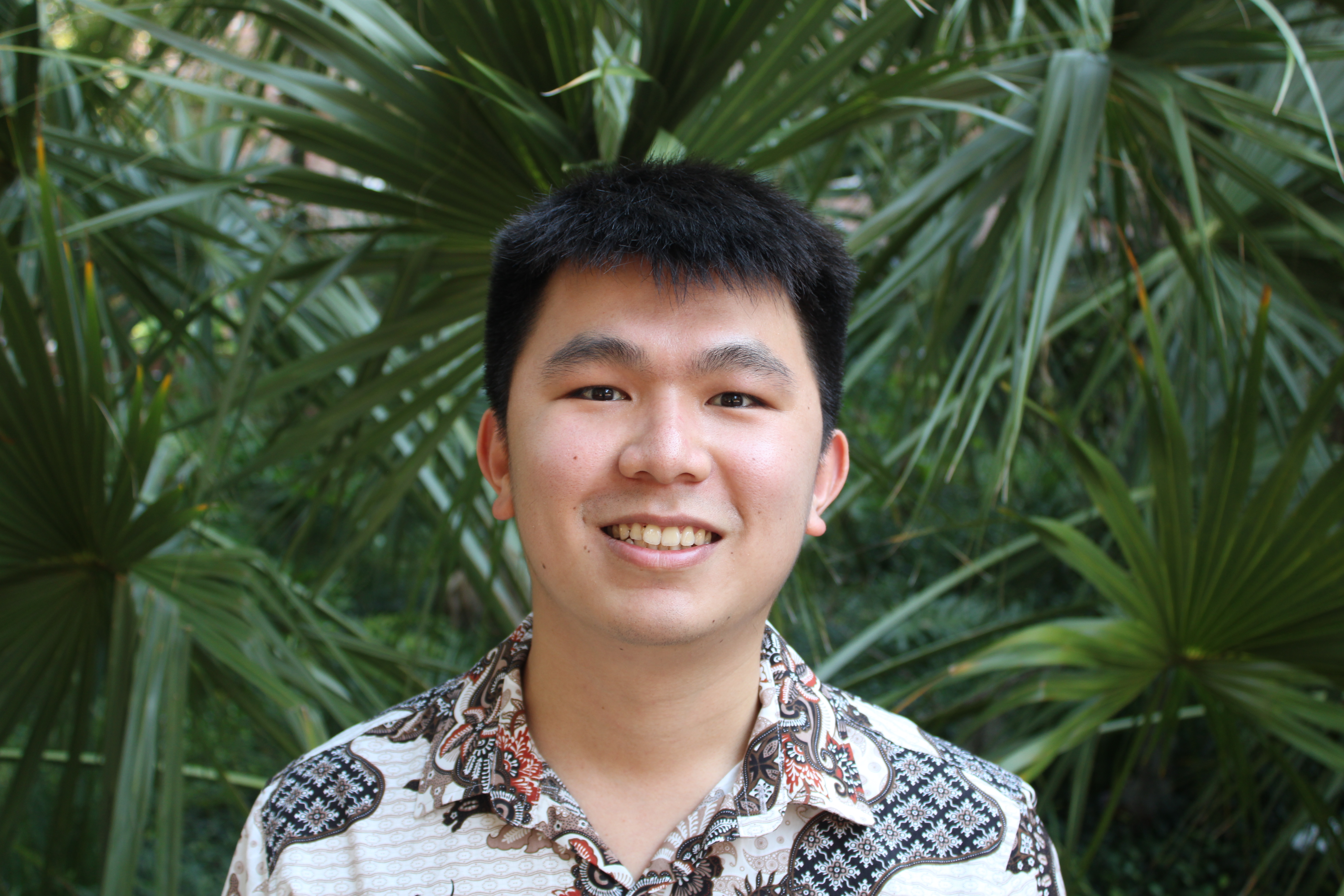
Research Mentor: Seng Yee, Sin,
Department, College, Affiliation: Political Science Department, Social Sciences and Public Policy
Contact Email: ss25bq@fsu.edu
Research Assistant Supervisor (if different from mentor):
Research Assistant Supervisor Email:
Faculty Collaborators:
Faculty Collaborators Email:
Department, College, Affiliation: Political Science Department, Social Sciences and Public Policy
Contact Email: ss25bq@fsu.edu
Research Assistant Supervisor (if different from mentor):
Research Assistant Supervisor Email:
Faculty Collaborators:
Faculty Collaborators Email:
Looking for Research Assistants: Yes
Number of Research Assistants: 4
Relevant Majors: Open to all majors, with preference given to students majoring in social sciences, political science, history, international affairs, Asian studies, or economics.
Project Location: On FSU Main Campus
Research Assistant Transportation Required: No, the project is remote Remote or In-person: Partially Remote
Approximate Weekly Hours: 10, Flexible schedule (Combination of business and outside of business. TBD between student and research mentor.)
Roundtable Times and Zoom Link:
Number of Research Assistants: 4
Relevant Majors: Open to all majors, with preference given to students majoring in social sciences, political science, history, international affairs, Asian studies, or economics.
Project Location: On FSU Main Campus
Research Assistant Transportation Required: No, the project is remote Remote or In-person: Partially Remote
Approximate Weekly Hours: 10, Flexible schedule (Combination of business and outside of business. TBD between student and research mentor.)
Roundtable Times and Zoom Link:
- Day: Tuesday, September 1
Start Time: 1:00
End Time: 5:00
Zoom Link: https://fsu.zoom.us/my/sengyee
Project Description
This project examines anti-Chinese violence in Southeast Asia over roughly two and a half centuries, from the Batavia massacre of 1740 in the Dutch East Indies to the riots that accompanied the fall of Suharto in Indonesia in 1998, and from the communist insurgency and political violence of the 1940s to the 1969 ethnic riots in Malaysia. Chinese minorities occupied a broadly similar position of economic prominence in both Malaysia and Indonesia, yet the two countries ultimately developed strikingly different patterns of ethnic violence. While violence against the Chinese minority became a recurring feature of political life in Indonesia, large-scale anti-Chinese violence in Malaysia eventually faded from the political landscape. Building on this broader comparative question, the project explores the colonial legacies that shaped these divergent political outcomes and examines how those legacies interacted with local conditions to produce different patterns of violence.My argument is that the answer lies partly in how colonial governments used minority communities to govern. In the Netherlands Indies, the Dutch appointed Chinese officers, known as Kapitan Cina, to administer the Chinese population. They also auctioned the rights to collect taxes and operate opium and gambling monopolies to Chinese bidders, while leaving much of the rice trade in Chinese hands. Taken together, these arrangements placed a small minority in a position of political and economic power disproportionate to its size. Many members of the indigenous population experienced this system as unfair and unjust, and the resulting grievances outlasted the colonial state that had created them. When violence eventually occurred, these long-standing grievances could provide a sense of justification for those who participated in it, helping to mobilize broader popular involvement in anti-Chinese violence.
In Malaysia case, The British established a strikingly similar system in Malaya, including their own Kapitan Cina appointments, revenue farms, and a Chinese Protectorate that governed the Chinese community as a distinct administrative category. Yet the historical record suggests that the trajectories of ethnic violence in Malaysia and Indonesia diverged significantly. Then, what explains the Malaysian pattern, and what were the consequences of its colonial legacy? The project will focus in particular on communist territorial control and political violence across the Japanese occupation, the postwar transitional period, and the British counterinsurgency campaign during the Malayan Emergency. It will further examine how these experiences shaped the development and persistence of anti-Chinese attitudes and violence in Malaysia.
Research assistants will work with primary documents from Dutch, British, Japanese, Indonesian, and Malaysian government archives and will help build the district-level dataset on which the broader comparison rests. Much of this work will be digital. Some sources have already been digitized and made freely available online by national libraries and can be accessed remotely from Tallahassee. Others exist only as printed volumes obtained through interlibrary loan or as photographs taken in archival reading rooms. These materials must then be scanned, catalogued, transcribed, checked, and converted into structured data. Research assistants will contribute to each stage of this process.
No prior archival research experience is required. Reading skill of Dutch, Japanese, or Bahasa Indonesia is preferred.
Research Tasks: Assistants contribute to building an original district-level historical dataset, and to building the digital archive the dataset is drawn from. Specific tasks include:
• Scanning printed sources borrowed through interlibrary loan. Several of the most valuable sources for this project are printed government surveys from the early 1900s that has yet to be digitised. We will request them through interlibrary loan, and they arrive with a short loan period and have to be scanned and returned. Assistants operate the scanning equipment, keep page order and volume information intact, and prepare the images for processing.
• Working with digitised collections that are already online and free. Several national libraries have scanned and made searchable the colonial newspapers and statistical serials this project needs, such as Delpher in the Netherlands and NewspaperSG in Singapore. Assistants search these systematically and extract what is relevant.
• Archival document coding. Read scanned colonial-era government reports and record specified information into a structured codebook.
• Running and checking automated transcription. Many documents are handwritten, or printed in early twentieth-century typefaces that ordinary optical character recognition handles badly. Assistants run pages through handwriting recognition and AI transcription tools and then check the output line by line against the original image.
• Dataset construction and cleaning. Enter, check, and standardise records in Excel or Google Sheets.
• Building an event catalogue. Compile incidents of communal violence from newspapers, government reports, and secondary sources, recording date, location, source, and estimated scale, with a citation for every entry.
• Literature review. Read assigned scholarship and write short structured memos summarising the argument, the evidence, and how it bears on this project.
Skills that research assistant(s) may need: • Reading proficiency in Dutch, Japanese, or Indonesian is preferred, but not required.
• Comfort with scanning equipment, digital images, and file organization.
• Willingness to read and review repetitive archival materials and extract relevant information accurately.
Mentoring Philosophy
• Goal-oriented and individualized mentoring. I prioritize understanding each mentee’s goals and working with them to align our mutual objectives. To me, this is closely connected to self-motivation and long-term skill development. I believe it is important to spend time understanding these goals and expectations before we begin working together.• Open and responsive communication. I hope to build an open-minded, friendly, and flexible mentoring relationship and environment. This allows mentees to openly discuss what they need from me and what aspects of our collaboration may need to be adjusted.
• Commitment to long-term development. I hope that participation in this project will serve not only the needs of the project itself, but also contribute to mentees’ long-term professional development, career growth, and success.
• Building on individual strengths. I would like to understand each mentee’s talents, interests, and strengths and help them develop these qualities into lasting skills and capabilities.
• Experience-sharing and mutual learning. I am open to sharing my own experiences, including challenges and lessons learned. I view mentoring as a mutual learning relationship and value the perspectives, experiences, and ideas that mentees bring to the table.
• Developing ownership and independence. Over time, I aim to give mentees increasing ownership of their work, decisions, and professional development. My goal is to provide guidance and support while helping mentees develop the confidence and independence to ultimately direct their own paths.