
UROP Project
Characterizing Neurodevelopmental Disease-Associated Conformational Changes in the βII-Spectrin Actin-Binding Domain
Neurodevelopmental Disorders, Biological Sciences, Biochemistry, Structural Biology, Protein Chemistry, Recombinant Proteins, Cytoskeletal Proteins, Spectrin, SPTBN1, Actin-Binding Proteins, Protein-Protein Interactions
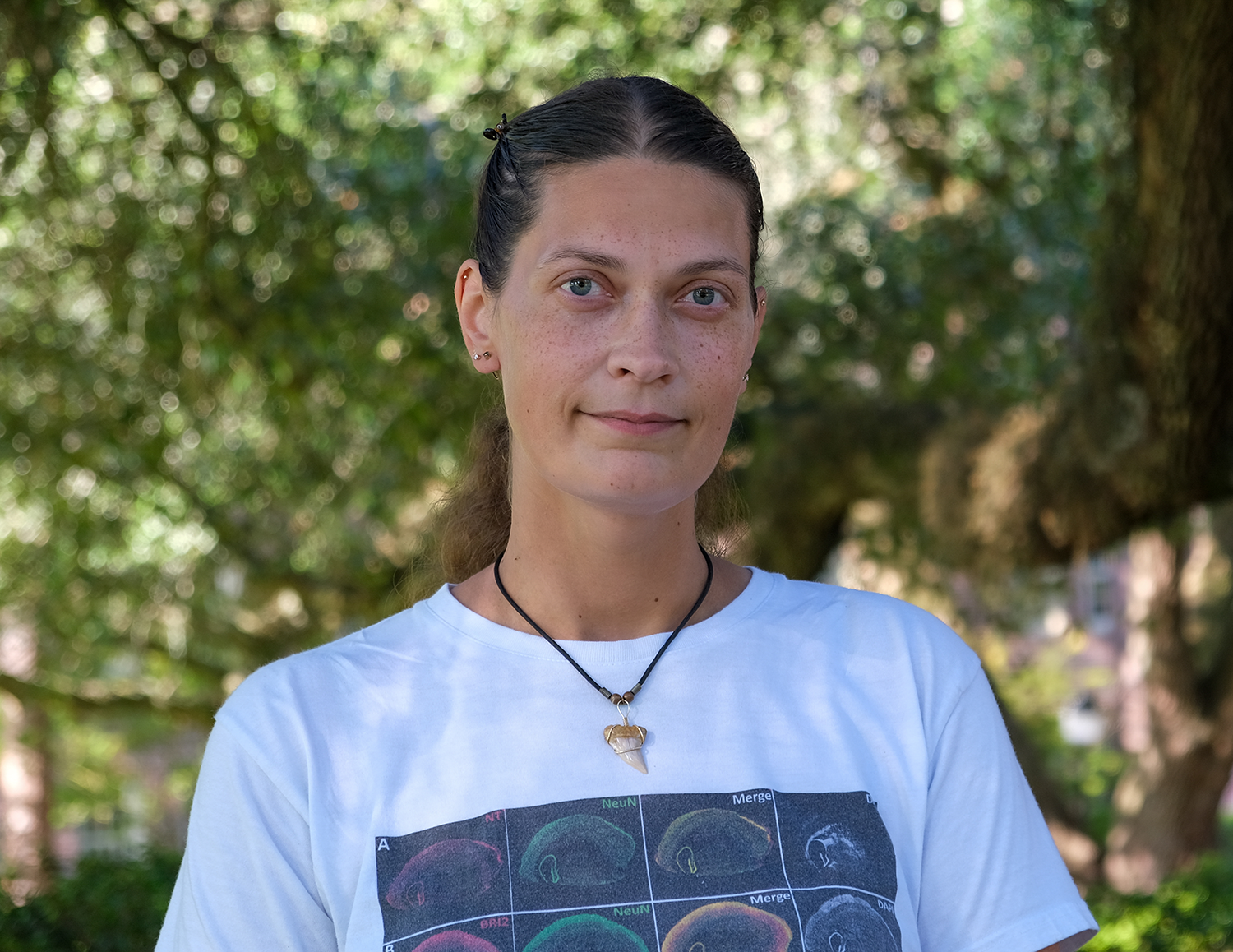
Research Mentor: Dr. Helene Tigro, She/Her
Department, College, Affiliation: Florida State University, Education, Health, and Human Sciences
Contact Email: ht24@fsu.edu
Research Assistant Supervisor (if different from mentor): Dr. Christopher Solis He/His
Research Assistant Supervisor Email: csolis@fsu.edu
Faculty Collaborators:
Faculty Collaborators Email:
Department, College, Affiliation: Florida State University, Education, Health, and Human Sciences
Contact Email: ht24@fsu.edu
Research Assistant Supervisor (if different from mentor): Dr. Christopher Solis He/His
Research Assistant Supervisor Email: csolis@fsu.edu
Faculty Collaborators:
Faculty Collaborators Email:
Looking for Research Assistants: Yes
Number of Research Assistants: 1
Relevant Majors: Biochemistry, Neuroscience, Chemistry, Biology, Computational Biology, Engineering
Project Location: On FSU Main Campus
Research Assistant Transportation Required: Remote or In-person: In-person
Approximate Weekly Hours: 10 hours, During business hours
Roundtable Times and Zoom Link:
Number of Research Assistants: 1
Relevant Majors: Biochemistry, Neuroscience, Chemistry, Biology, Computational Biology, Engineering
Project Location: On FSU Main Campus
Research Assistant Transportation Required: Remote or In-person: In-person
Approximate Weekly Hours: 10 hours, During business hours
Roundtable Times and Zoom Link:
- Day: Wednesday, September 2
Start Time: 1:00
End Time: 2:30
Zoom Link: https://fsu.zoom.us/j/98918911622
Project Description
βII-spectrin (SPTBN1) is a cytoskeletal scaffolding protein that links F-actin to membrane-associated protein complexes and plays essential roles in neuronal development, membrane organization, and maintenance of cellular architecture. Its N-terminal actin-binding domain (ABD) contains tandem calponin homology domains (CH1 and CH2) that regulate actin interactions through a dynamic equilibrium between closed (autoinhibited) and open conformations. Disease-associated variants within the ABD disrupt this regulatory mechanism and have been linked to neurodevelopmental disorders characterized by developmental delay, intellectual disability, and behavioral abnormalities.Several pathogenic variants are predicted to alter interactions at the CH1-CH2 interface, thereby shifting the structural equilibrium of the ABD. Some mutations may stabilize the closed state and reduce actin association, whereas others are predicted to promote domain opening and enhance actin affinity. This project will experimentally and computationally characterize recombinant human βII-spectrin wild-type (WT) and mutant ABD proteins to determine how disease-associated mutations affect protein structure and function.
Despite the growing number of SPTBN1 variants identified in patients, the molecular mechanisms underlying their pathogenicity remain poorly understood. Because βII-spectrin is critical for axonal growth, neuronal connectivity, and organization of the neuronal cytoskeleton, disruption of its actin-binding properties may contribute directly to disease development. By linking patient-associated mutations to structural and functional consequences at the molecular level, this project aims to advance our understanding of SPTBN1-associated neurodevelopmental disorders and the mechanisms that drive neuronal dysfunction.
Research Tasks: The student will conduct a literature review on spectrin biology, actin-binding proteins, and connection to neurodevelopmental disorders. Research activities will include recombinant expression and purification of wild-type and disease-associated βII-spectrin actin-binding domain (ABD) variants, followed by protein characterization using SDS-PAGE, native PAGE, and mass photometry. The effects of mutations on F-actin binding will be quantified through actin co-sedimentation assays. Computational analyses will include AlphaFold modeling, ChimeraX visualization, structural measurements, and electrostatic surface analysis. Experimental and computational results will be integrated to determine how pathogenic SPTBN1 variants alter βII-spectrin structure and function. Statistical analysis, data interpretation, and figure preparation will also be performed.
Skills that research assistant(s) may need: Good theoretical understanding of biology and chemistry. Interest in protein biochemistry, structural biology, and molecular mechanisms of disease. Experience with laboratory techniques is helpful but not required. Experience with molecular visualization software (ChimeraX, PyMOL), programming (Python, R, MATLAB), or structural biology tools is beneficial but not required. Strong organizational, time-management, and communication skills, along with the ability to work independently and as part of a team, are highly valued.
Mentoring Philosophy
Mentorship is one of the most rewarding aspects of scientific research and an important responsibility that extends beyond technical training. Throughout my career, I have been committed to helping students develop as scientists, critical thinkers, and future professionals. During my doctoral studies, I supervised more than 20 Bachelor's and Master's thesis students, all of whom have continued into careers in the biomedical sciences or advanced training through PhD programs.As a postdoctoral researcher, I work closely with mentees in the laboratory, providing hands-on guidance in experimental design, recombinant protein expression and purification, structural and computational biology, and quantitative data analysis. My goal is to help students build both technical expertise and scientific confidence while developing the independence needed to design experiments, interpret results, and solve complex problems.
I strive to create an inclusive, collaborative, and supportive research environment where curiosity is encouraged, questions are welcomed, and challenges are viewed as opportunities for growth. By actively involving students in ongoing research projects, I aim to provide meaningful research experiences that foster scientific discovery, professional development, and long-term success. My commitment to undergraduate mentorship was recognized with the 2025 Postdoctoral Undergraduate Research Mentor Award, reflecting my dedication to supporting and empowering the next generation of scientists.
Additional Information
linkedin.com/in/helene-tigro-656130282Recording of the roundtable can be reviewed here: https://fsu-my.sharepoint.com/:v:/g/personal/ht24_fsu_edu/IQDpK-QpI0SuSqIRKQpyfBymAYyf00NP0QCLZQkaZfDuylA?nav=eyJyZWZlcnJhbEluZm8iOnsicmVmZXJyYWxBcHAiOiJPbmVEcml2ZUZvckJ1c2luZXNzIiwicmVmZXJyYWxBcHBQbGF0Zm9ybSI6IldlYiIsInJlZmVycmFsTW9kZSI6InZpZXciLCJyZWZlcnJhbFZpZXciOiJNeUZpbGVzTGlua0NvcHkifX0&e=S7YzxL
Slideshow can we reviewed here: https://fsu-my.sharepoint.com/:p:/g/personal/ht24_fsu_edu/IQBPbrks452WQKK_-sMVBwgOAbdGjhjfoS9ad58rXWKvluY?e=aibKp6