
UROP Project
I Belong Here: Black Women's Sense of Belonging in Undergraduate Mathematics
Black women, education, active learning, belonging, mathematics
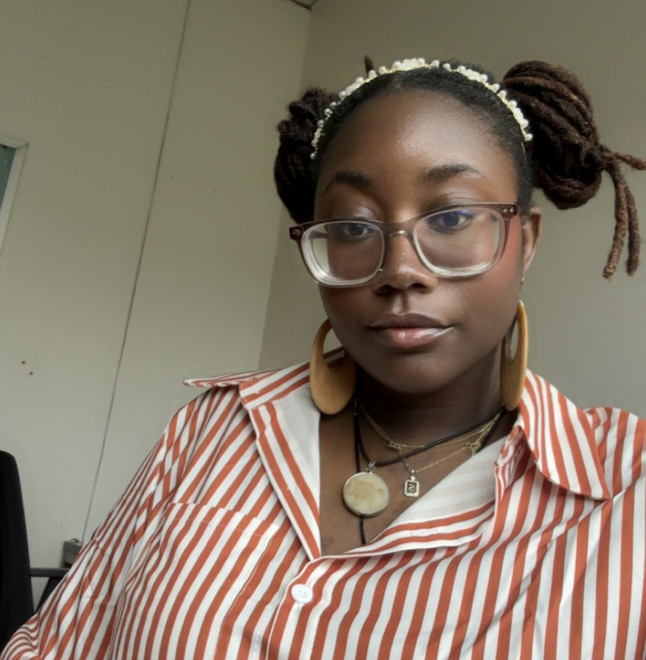
Research Mentor: Ms. Martyna Fay Smart, M.S Biomathematics , she/her
Department, College, Affiliation: School of Teacher Education; Mathematics Education, Education, Health, and Human Sciences
Contact Email: mfsmart@fsu.edu
Research Assistant Supervisor (if different from mentor):
Research Assistant Supervisor Email:
Faculty Collaborators:
Faculty Collaborators Email:
Department, College, Affiliation: School of Teacher Education; Mathematics Education, Education, Health, and Human Sciences
Contact Email: mfsmart@fsu.edu
Research Assistant Supervisor (if different from mentor):
Research Assistant Supervisor Email:
Faculty Collaborators:
Faculty Collaborators Email:
Looking for Research Assistants: Yes
Number of Research Assistants: 2
Relevant Majors: Open to All Majors, but Mathematics and Education majors will find this to be helpful
Project Location: On FSU Main Campus
Research Assistant Transportation Required: Remote or In-person: Partially Remote
Approximate Weekly Hours: 6-8 hours, Flexible schedule (Combination of business and outside of business. TBD between student and research mentor.)
Roundtable Times and Zoom Link:
Number of Research Assistants: 2
Relevant Majors: Open to All Majors, but Mathematics and Education majors will find this to be helpful
Project Location: On FSU Main Campus
Research Assistant Transportation Required: Remote or In-person: Partially Remote
Approximate Weekly Hours: 6-8 hours, Flexible schedule (Combination of business and outside of business. TBD between student and research mentor.)
Roundtable Times and Zoom Link:
- Day: Thursday, September 3
Start Time: 1:00
End Time: 2:30
Zoom Link: link
Project Description
Black women are disproportionately represented in undergraduate mathematics, affecting their feelings of belonging. While research has acknowledged mathematics as a white, patriarchal space and that mathematical spaces can can Black women and underrepresented minority (URM) students to exhibit labor, both of which affect belonging, it still remains unclear if active learning has anything to do with their feelings of belonging. As active learning has been seen as a useful pedagogical tool, it is important for educators to know the effect it has on the feelings of belonging for URM students because it could be the difference in success, career decisions, and representation. Through a review of the literature, we will determine the contributing factors to Black women's sense of belonging in mathematics (including if active learning has anything to do with it).Research Tasks: Over the course of the year, we will conduct a literature review on the contributing factors to Black women's sense of belonging in undergraduate mathematics.
Skills that research assistant(s) may need: A research assistant is required to be:
- Ambitious
- Attentive
- Analytical
- Willing to learn new techniques
A research assistant is recommended to be able to:
- Read, analyze, and summarize literature/peer-reviewed articles
- Use Notion
But most importantly, a research assistant should be willing to learn and believe they have the capacity to learn new things. Needed skills will be taught.
Mentoring Philosophy
I operate on a foundational belief: every student belongs in my lab, and every student has the capacity to master complex ideas, including mathematics. Excellence in research is not an innate trait reserved for a few, but a discipline built through curiosity, practice, and effective guidance.My primary goal as a mentor is to demystify the research process and help students build unwavering confidence in their analytical abilities. I cultivate an environment rooted in mutual respect, care, and high expectations. I commit to supporting my students’ growth wholeheartedly, and in turn, I expect them to bring integrity, effort, and respect for their peers to our collective work.