
UROP Project
Causes, Effects, and Mitigation Strategies of Smartphone Distraction Among FSU Undergraduates
Digital distraction, Undergraduate Students, Smartphone Use
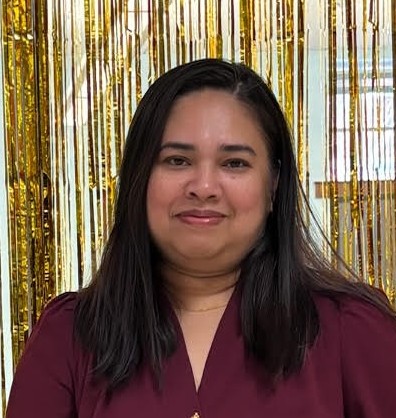
Research Mentor: ln25k@fsu.edu Lizoon Nahar, She/Her/Hers
Department, College, Affiliation: Florida State University, Undergraduate Studies
Contact Email: lnahar@fsu.edu
Research Assistant Supervisor (if different from mentor):
Research Assistant Supervisor Email:
Faculty Collaborators:
Faculty Collaborators Email:
Department, College, Affiliation: Florida State University, Undergraduate Studies
Contact Email: lnahar@fsu.edu
Research Assistant Supervisor (if different from mentor):
Research Assistant Supervisor Email:
Faculty Collaborators:
Faculty Collaborators Email:
Looking for Research Assistants: Yes
Number of Research Assistants: 5
Relevant Majors: Open to all majors.
Project Location: On FSU Main Campus
Research Assistant Transportation Required: Remote or In-person: Partially Remote
Approximate Weekly Hours: 5 hours, During business hours
Roundtable Times and Zoom Link:
Number of Research Assistants: 5
Relevant Majors: Open to all majors.
Project Location: On FSU Main Campus
Research Assistant Transportation Required: Remote or In-person: Partially Remote
Approximate Weekly Hours: 5 hours, During business hours
Roundtable Times and Zoom Link:
- Day: Friday, September 4
Start Time: 1:30
End Time: 2:00
Zoom Link: https://fsu.zoom.us/j/2476043412
Project Description
This study will explore smartphone distraction among undergraduate students at Florida State University (FSU), looking at what causes it, how it affects students, and the strategies they use to manage it. Participants will be recruited through snowball sampling, with an online Qualtrics survey link shared among FSU undergraduates. The survey will collect basic demographic information and include open-ended questions asking students to describe what tends to trigger their phone use, how it affects their focus, mood, or academic work, and the strategies they rely on to cope with or reduce it.Quantitative responses will be summarized using descriptive statistics to help identify patterns in the causes, effects, and mitigation strategies students report. Open-ended responses will be analyzed thematically using NVivo, with the goal of identifying recurring themes in why students get distracted by their phones, how that distraction shows up in their daily lives, and what they do to manage it.
The findings will be shared through a research poster presentation.
Research Tasks: 1. Literature Review
2. Data Collection
3. Data Analysis
4. Presentation on Scholarly Forum
These tasks will help students to practice
APA 7th edition academic writing
Finding and evaluating reliable, peer-reviewed scholarly articles
Conducting effective literature searches using academic databases
Data cleaning and preparation
Quantitative data analysis
Qualitative data analysis
Data management and secure data storage
Thematic analysis using NVivo
Interpretation of research findings
Empirical research writing
Research poster development and presentation
Presenting empirical research in peer-reviewed scholarly platforms
Skills that research assistant(s) may need: Required skills:
1. Ability to read and understand scholarly, peer-reviewed articles
2. Basic computer and digital literacy
3. Attention to detail and ability to work accurately with data
4. Ability to maintain confidentiality and ethical handling of research data
5. Willingness to learn Qualtrics, NVivo, and statistical analysis tools
6. Effective communication and teamwork skills
7. Interest in learning how to interpret and communicate research findings
Mentoring Philosophy
As an educator with a research background at Florida State University, my mentoring philosophy for the Undergraduate Research Opportunity Program (UROP) is grounded in John Dewey’s principle of learning-by-doing. I view undergraduates as active collaborators capable of driving empirical research. My primary objective is to empower UROP scholars to transition from passive learners into confident, data-driven researchers by providing a supportive, hands-on learning environment.To build comprehensive scholarly skills, I immerse students step-by-step into the research cycle: conducting literature reviews, managing data collection, performing qualitative and quantitative analysis, and disseminating findings. Throughout this cycle, I directly teach students how to execute academic database searches, evaluate peer-reviewed sources, ensure secure data management, utilize research tools, interpret complex results, and design research posters for scholarly presentations.
Within each stage, I apply a progressive "crawl, walk, run, fly" framework to guide students from novice learners to independent experts. In any given task students begin in the crawl phase by observing and through explicit instruction. They transition to the walk phase as they practice skills under guided supervision, move into the run phase through increasing independence and execution, and ultimately fly as autonomous scholars taking complete ownership of their work.
Even if a student does not reach the "fly" stage across every aspect of the project within the program's timeframe, my overarching goal is to instill a strong growth mindset. I empower scholars to view challenges as learning opportunities, equipping them with resilience, technical confidence, and a lasting commitment to scholarly growth.