
UROP Project
Following Plastic Pollution Across the Global Ocean: Linking plastic distribution, ocean dynamics, and marine life exposure
Plastic pollution, global ocean, marine life
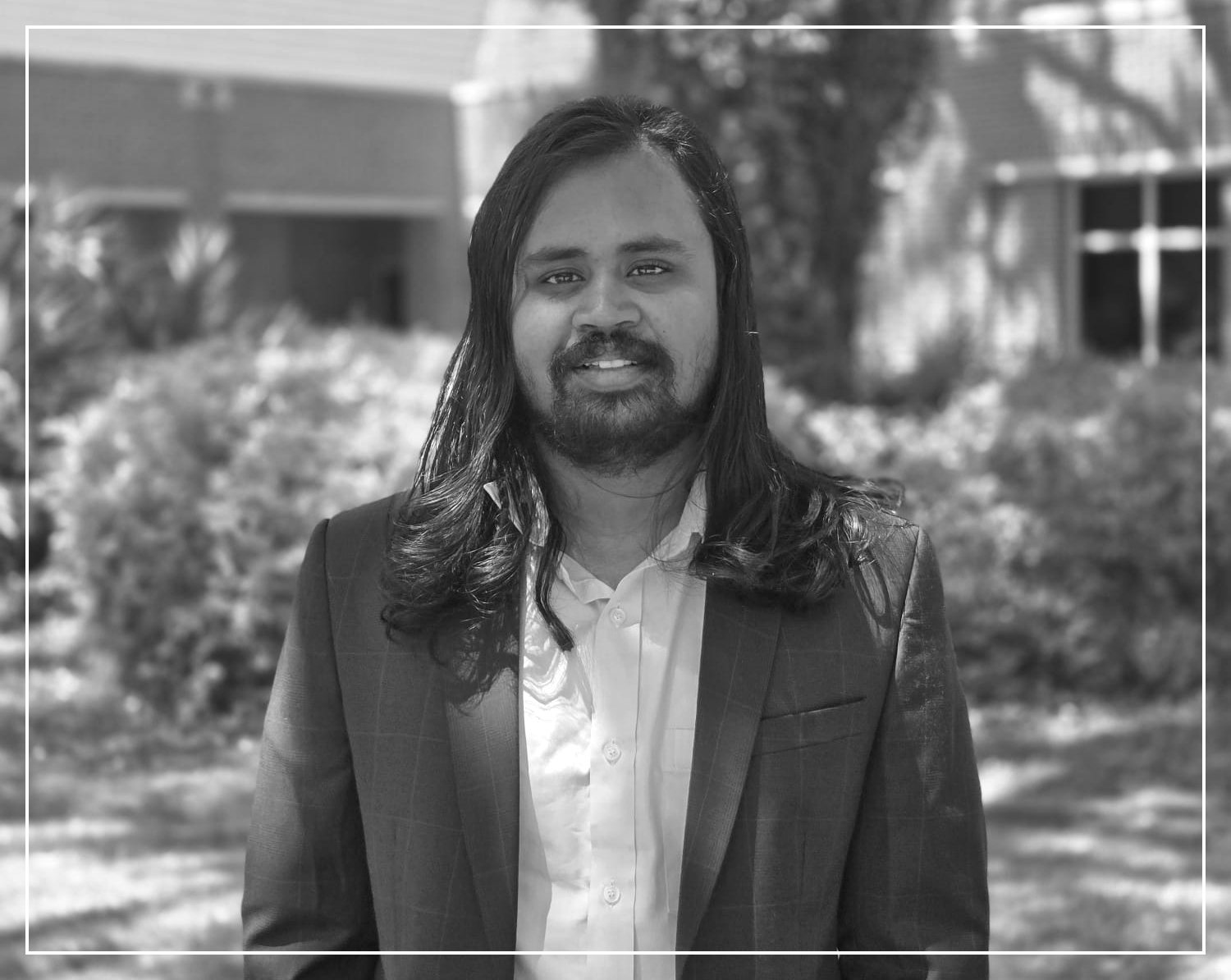
Research Mentor: Abdul Mobin Ibna Hafiz, He/Him
Department, College, Affiliation: Civil and Environmental Engineering, FAMU-FSU College of Engineering
Contact Email: ai22h@fsu.edu
Research Assistant Supervisor (if different from mentor):
Research Assistant Supervisor Email:
Faculty Collaborators:
Faculty Collaborators Email:
Department, College, Affiliation: Civil and Environmental Engineering, FAMU-FSU College of Engineering
Contact Email: ai22h@fsu.edu
Research Assistant Supervisor (if different from mentor):
Research Assistant Supervisor Email:
Faculty Collaborators:
Faculty Collaborators Email:
Looking for Research Assistants: Yes
Number of Research Assistants: 1
Relevant Majors: Open to all majors
Project Location: FAMU-FSU College of Engineering
Research Assistant Transportation Required: FAMU-FSU Bus Service Remote or In-person: Partially Remote
Approximate Weekly Hours: 5-10 hours, Flexible schedule (Combination of business and outside of business. TBD between student and research mentor.)
Roundtable Times and Zoom Link:
Not participating in the roundtable
Number of Research Assistants: 1
Relevant Majors: Open to all majors
Project Location: FAMU-FSU College of Engineering
Research Assistant Transportation Required: FAMU-FSU Bus Service Remote or In-person: Partially Remote
Approximate Weekly Hours: 5-10 hours, Flexible schedule (Combination of business and outside of business. TBD between student and research mentor.)
Roundtable Times and Zoom Link:
Not participating in the roundtable
Project Description
Plastic particles have become ubiquitous in global ocean, covering from coastal estuaries to the open sea and the poles. These particles are transported in a connected path from land and rivers, through estuaries, and into the open ocean, and once they enter the water, ocean physics govern the transport. Currents, winds, waves, and surface drift carry particles over long distances and concentrate them in accumulation zones such as subtropical gyres and coastal convergence zones. Additionally, human activities also shape where plastics enter and build up, with shipping lanes, fishing grounds, and river mouths acting as major sources. The species most exposed to this pollution are often the ones least able to avoid it, including filter feeders such as oysters that pump large volumes of water and benthic organisms such as crayfish that live in the sediments where these particles settle. My research focuses on how plastic particles move through stormwater and marine systems and how they can be detected and mapped using field, satellite, and modeling approaches. However, research gap remains regarding the global spatial link between where plastics accumulate, the oceanographic and anthropogenic activities that drive that accumulation, and how vulnerable species get affected by this. This project will combine a large global plastic dataset with oceanographic and ship-activity data to map that overlap and to explore how pollution and ocean dynamics together shape habitat exposure for marine life. The aim is to move from knowing that plastics are everywhere toward understanding where the risk to marine habitats is highest and why, which supports better monitoring, restoration, and pollution-reduction decisions.Research Tasks: 1. Collect and process the data. Compile and clean the NOAA NCEI Marine Microplastics dataset (the provided global dataset of ocean plastic measurements) along with matching oceanographic data from the Copernicus Marine Service (CMEMS), such as surface currents, Stokes drift, wind speed, and sea surface temperature, and global ship-traffic data from Automatic Identification System (AIS) sources. Standardize these datasets to common units, time periods, and a shared map grid so they can be compared directly.
2. Map and characterize global plastic distribution and its drivers. Create maps of plastic concentration by ocean and region, then use straightforward statistics and visualization in to test how concentrations relate to currents, wind, drift, and ship activity. This step identifies accumulation zones and the likely pathways along which plastics travel.
3. Interpret and communicate the findings. Prepare clear figures and a short summary or poster describing where and why marine habitats are most exposed to plastic pollution, and what the results suggest for future monitoring and mitigation.
Skills that research assistant(s) may need: 1. Literature review (required)
2. Exploratory Data Analyses (required)
3. Data and result interpretation (required)
4. Map generation (recommended)
Mentoring Philosophy
My mentoring philosophy is grounded in attentive listening, intentional availability, and a commitment to developing independent researchers. I approach each mentee as an individual with distinct goals, strengths, motivations, and barriers. Early in a mentoring relationship, I try to understand what the student hopes to accomplish, what skills they already bring, and where they need structured support. This helps me tailor guidance rather than offer a generic approach.I believe effective mentorship balances support with ownership. My role is not to solve every problem a mentee may face, but to help them build the judgment, confidence, and accountability needed to solve complex problems themselves. In my previous mentoring experiences with undergrad and masters students, this has meant training students in experimental protocols, explaining the scientific rationale behind each step, and gradually giving them responsibility to adapt methods, troubleshoot, and communicate their findings.
I also value a mentoring environment where questions are welcomed and mistakes are treated as part of learning. Research requires persistence, uncertainty, and revision; students grow when they are challenged in a setting built on mutual respect and constructive feedback. I aim to be accessible and responsive while maintaining clear expectations about communication, timelines, and responsibilities.
Ultimately, I measure successful mentorship by a mentee’s increasing independence. I want students to leave our work together not only with stronger technical skills, but also with greater curiosity, confidence, ethical awareness, and readiness to contribute meaningfully to the scientific and engineering community.