
UROP Project
Understanding the interaction of Adaptor Protein Complexes with their Chaperones from a structural perspective.
Structural Biology, Recombinant Protein Purification, Biochemical Characterization, Hands-On Lab Training
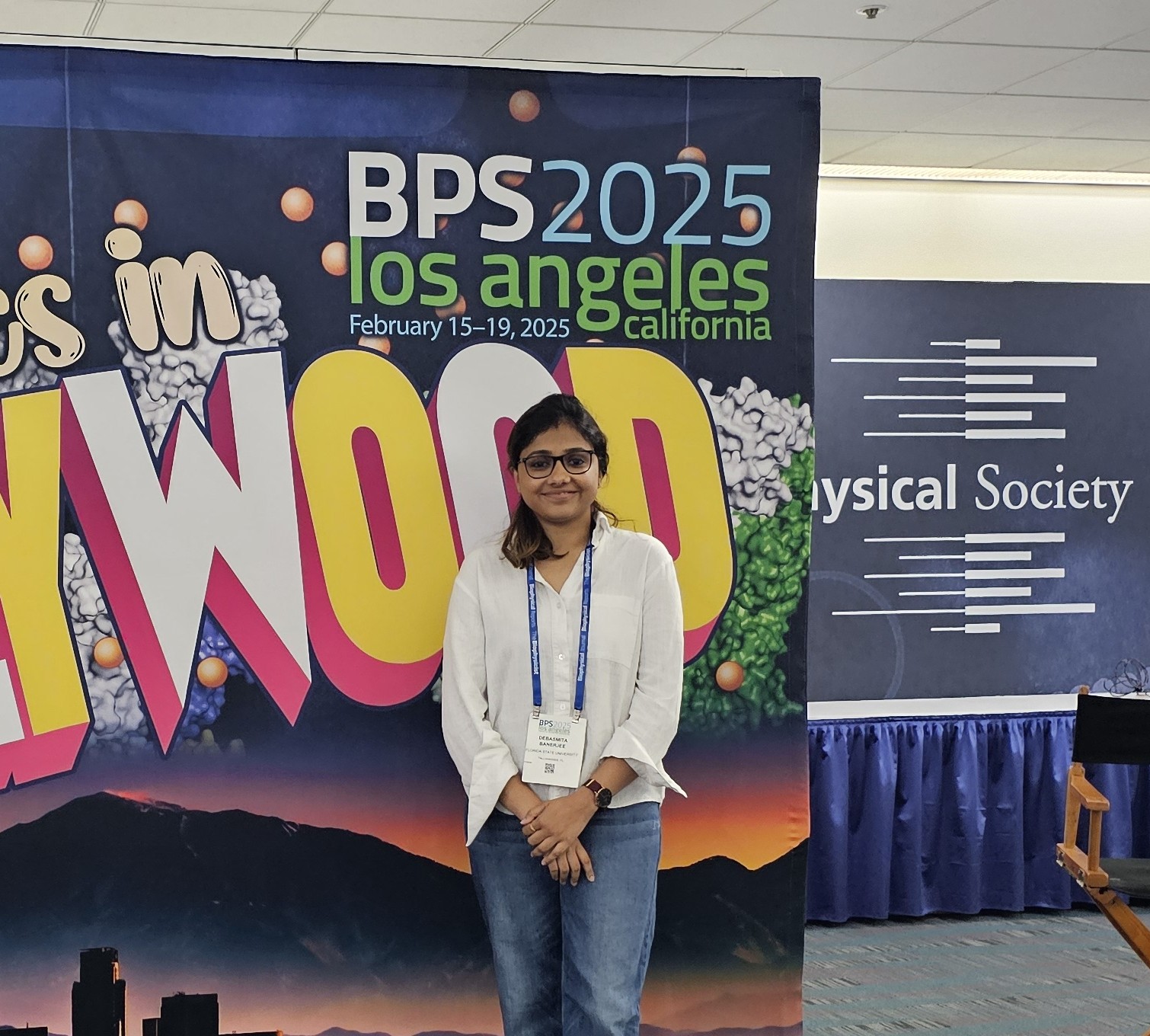
Research Mentor: db23@fsu.edu Debasmita Banerjee, Ms
Department, College, Affiliation: Molecular Biopysics, Arts and Sciences
Contact Email: db23@fsu.edu
Research Assistant Supervisor (if different from mentor):
Research Assistant Supervisor Email:
Faculty Collaborators:
Faculty Collaborators Email:
Department, College, Affiliation: Molecular Biopysics, Arts and Sciences
Contact Email: db23@fsu.edu
Research Assistant Supervisor (if different from mentor):
Research Assistant Supervisor Email:
Faculty Collaborators:
Faculty Collaborators Email:
Looking for Research Assistants: Yes
Number of Research Assistants: 1
Relevant Majors: Biochemistry, Biological Science, Chemistry, Molecular Biology, Biomedical Engineering
Project Location: On FSU Main Campus
Research Assistant Transportation Required: Remote or In-person: In-person
Approximate Weekly Hours: 8 hours per week. , Flexible schedule (Combination of business and outside of business. TBD between student and research mentor.)
Roundtable Times and Zoom Link:
Not participating in the roundtable
Number of Research Assistants: 1
Relevant Majors: Biochemistry, Biological Science, Chemistry, Molecular Biology, Biomedical Engineering
Project Location: On FSU Main Campus
Research Assistant Transportation Required: Remote or In-person: In-person
Approximate Weekly Hours: 8 hours per week. , Flexible schedule (Combination of business and outside of business. TBD between student and research mentor.)
Roundtable Times and Zoom Link:
Not participating in the roundtable
Project Description
Every cell relies on molecular machinery system to transport proteins in and out of its surface which in turn is central to how cells communicate and stay healthy. Much of this transport happens through a process called Clathrin-mediated endocytosis, where a protein called Clathrin forms a cage-like coat that pinches off a piece of the cell membrane, carrying its cargo inside. However, Clathrin can't recognize that cargo on its own and needs the help of another complex called Adaptor Protein (AP)2. AP2 in turn needs to be assembled correctly to perform its job. This assembly is aided in a step by step process with the help of a set of helper proteins called assembly chaperones. Despite its physiological importance, the structural basis of this stepwise assembly process remains entirely undefined, and its disruption is clinically consequential with mutations in these assembly chaperones causing distinct human disease phenotypes, including punctate palmoplantar keratoderma (AAGAB) and cardiofacioneurodevelopmental syndrome (CCDC32).This project uses cryo-electron microscopy and protein biochemistry to understand this assembly process in the act. As a UROP candidate, you'd get real, hands-on experience in expressing and purifying proteins from bacterial cultures and running biochemistry experiments like size-exclusion chromatography to characterize how proteins fit together which are also all the standard techniques forming the very foundation of structural biology and biochemistry research, providing experience applicable to graduate study, medical training, or careers in biomedical research.
Research Tasks: Assisting with bacterial protein expression and culture growth; protein purification via affinity chromatography and size-exclusion chromatography; preparing buffers and reagents; running and analyzing SDS-PAGE gels; organizing and maintaining lab notebooks/data records; and reviewing relevant literature on adaptor protein complexes and structural biology methods as background for ongoing experiments.
Skills that research assistant(s) may need: Required:
Attention to detail and careful record-keeping
Reliability and consistent weekly availability
Willingness to complete lab safety training and learn new techniques
Recommended:
Coursework in biochemistry, molecular biology, or cell biology
Prior wet-lab experience (pipetting, solution preparation)
Basic familiarity with data organization tools (e.g., Excel)
Interest in structural biology or protein biochemistry
Mentoring Philosophy
My mentoring approach is grounded in the principle that a research assistant is a developing scientist whose training should be structured, individualized, and progressive, not incidental. From the outset, I assess each mentee's goals, prior experience, and preferred mode of learning to tailor my approach; for example, a student oriented toward medical school benefits from a different emphasis than one preparing for doctoral study.Training progresses from guided instruction to independent practice. I introduce technical skills through demonstration and supervised repetition, then increase each mentee's responsibility for planning, conducting, and interpreting experiments. This transition toward ownership helps mentees build durable competence and confidence. Through an inquiry-based approach, I enable mentees to reason independently through experimental design and troubleshooting.
In my experience, this approach clarifies concepts better than directly providing solutions. When troubleshooting a failed purification or interpreting a chromatography trace, I ask questions that help mentees identify sources of error, evaluate evidence, and propose next steps. I frame unexpected outcomes as informative data and foster an environment where honest reporting, questions, and mistakes are welcomed.
I view mentorship as collaborative and responsive, regularly seeking feedback on my instruction and adjusting accordingly. I am transparent about my non-linear path into structural biology, including two years in molecular genomics before graduate study, to model self-reflection. Recognizing that no single mentor meets every developmental need, I connect mentees with additional resources when a question extends beyond my expertise. The objective is technical competence, independent reasoning, and professional confidence built on mutual respect.
Additional Information
Project PublicationsAP1/AP2 Adaptor Complex Assembly Chaperone Project — Yin Laboratory
1. Wan C, Crisman L, Wang B, et al. AAGAB is an assembly chaperone regulating AP1 and AP2 clathrin adaptors. J Cell Sci. 2021;134(19):jcs258587. doi: https://doi.org/10.1242/jcs.258587
2. Gulbranson DR, Crisman L, Lee M, et al. AAGAB Controls AP2 Adaptor Assembly in Clathrin-Mediated Endocytosis. Dev Cell. 2019;50(4):436-446.e5. doi: https://doi.org/10.1016/j.devcel.2019.06.013
3. Wu J, Wan C, Tian Y, et al. Bi-handed assembly chaperones regulate protein complex assembly through an intramolecular handover mechanism. Sci Adv. 2025;11(37):eadw9158. doi: https://doi.org/10.1126/sciadv.adw9158
4. Wan C, Puscher H, Ouyang Y, et al. An AAGAB-to-CCDC32 handover mechanism controls the assembly of the AP2 adaptor complex. Proc Natl Acad Sci USA. 2024;121(34):e2409341121. doi: https://doi.org/10.1073/pnas.2409341121
5. Wan C, Wu J, Ouyang Y, et al. Regulation of AP1 adaptor assembly by the bi-handed chaperone MEA1. Nat Commun. 2026 Jan 20;17(1):1876. doi: https://doi.org/10.1038/s41467-026-68662-3