
UROP Project
FSU Postcard Archive
digital archive, visual rhetoric, public memory, cultural studies, museum studies
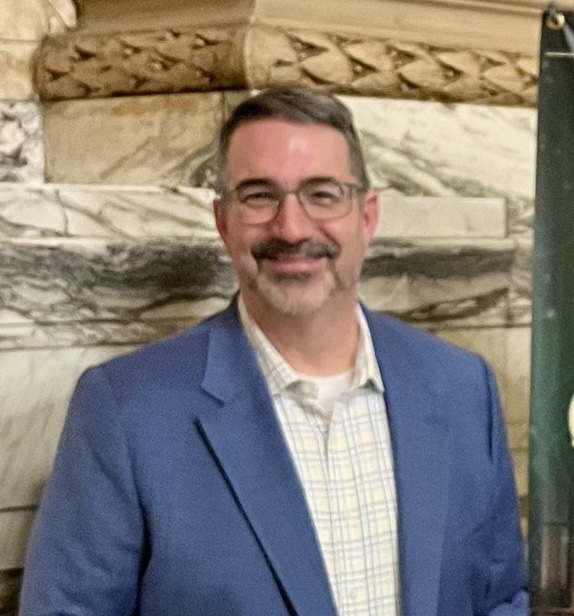
Research Mentor: Dr. Michael Neal, he/him
Department, College, Affiliation: Florida State University, Arts and Sciences
Contact Email: mrneal@fsu.edu
Research Assistant Supervisor (if different from mentor):
Research Assistant Supervisor Email:
Faculty Collaborators:
Faculty Collaborators Email:
Department, College, Affiliation: Florida State University, Arts and Sciences
Contact Email: mrneal@fsu.edu
Research Assistant Supervisor (if different from mentor):
Research Assistant Supervisor Email:
Faculty Collaborators:
Faculty Collaborators Email:
Looking for Research Assistants: Yes
Number of Research Assistants: 5
Relevant Majors: Open to all majors
Project Location: On FSU Main Campus
Research Assistant Transportation Required: Remote or In-person: Partially Remote
Approximate Weekly Hours: 3-5 hours weekly (one hour of meeting in person, the rest self directed), Flexible schedule (Combination of business and outside of business. TBD between student and research mentor.)
Roundtable Times and Zoom Link:
Number of Research Assistants: 5
Relevant Majors: Open to all majors
Project Location: On FSU Main Campus
Research Assistant Transportation Required: Remote or In-person: Partially Remote
Approximate Weekly Hours: 3-5 hours weekly (one hour of meeting in person, the rest self directed), Flexible schedule (Combination of business and outside of business. TBD between student and research mentor.)
Roundtable Times and Zoom Link:
- Day: Tuesday, September 1
Start Time: 2:00
End Time: 3:00
Zoom Link: https://fsu.zoom.us/j/8818962394 - Day: Wednesday, September 2
Start Time: 1:00
End Time: 2:00
Zoom Link: https://fsu.zoom.us/j/8818962394
Project Description
The FSU Card Archive serves as both a physical repository and digital humanities platform dedicated to preserving and providing scholarly access to historic postcards, stereo cards, first day issue stamp cards, and other related artifacts. The archive is organized by items (individual cards with metadata), exhibits (curated displays supporting interdisciplinary research in visual rhetoric, material culture studies, art history, communications, and related fields), and collections (honoring doners that have contributed to the site).We believe each postcard functions as a primary source document that captures specific historical moments while reflecting the cultural values, technological capabilities, and social communications of its era. Researchers can locate materials by thematic content (e.g., World War II propaganda, Florida State College for Women imagery), chronological periods (1930s Depression-era cards), geographical locations (Vero Beach tourism, Cuban landscapes), or publisher information. Past student-curated exhibits have explored topics such as ethnic stereotyping in early 20th-century visual culture, sexist humor in popular media, public venues for entertainment, and environmental messaging. Each project demonstrates the archive’s capacity to support diverse voices and critical perspectives.
The archive’s mission includes preservation but extends to facilitate scholarship. The vast majority of items and exhibits have been curated by undergraduate students, though graduate students and faculty participate as well. We see this site as a tool for learning archival practices and processes. The platform’s exhibit functionality allows users to create publicly accessible displays that contribute to ongoing scholarly conversations.
Interns will engage in three interconnected areas of digital archiving work:
1. Learn OMEKA content management system for cultural heritage collections
2. Conduct visual readings and analysis of postcard entries to enhance descriptive metadata
3. Curate original thematic exhibits on specific postcard series, publishers, regional collections, or topical themes
Learn OMEKA archival system, conduct visual readings and analysis of postcard entries, and curate original thematic exhibits on specific postcard series on a topic relating to the student's interests.
Approximately one hour team meeting per week. The rest independent, though I'm available for one-on-one meetings by appointment. AI acceptable for research, design, and editing as long as it is used reflectively and critically as a support, not substitute for student work.
Research Tasks: Fall semester will include learning the metadata system, editing existing items, adding new items, transferring one or more exhibits from the old to new system to learn how to create exhibits, and begin framing their own exhibits. Students will develop their own focus, which will require secondary research for literature and potentially a framework for the visual analysis.
Skills that research assistant(s) may need: All research skills and programs (e.g., OMEKA) are taught. They are simple to learn.
Mentoring Philosophy
My mentoring philosophy emphasizes collaboration, engagement, and individualization. I recognize my positionalities as a white, male, tenured faculty member and acknowledge that my experiences may differ from those of my mentees. Rather than expecting students to mirror my trajectory, I help them develop their own scholarly identities and research projects.My mentoring approach centers on three core principles:
Subjectivities: I help mentees identify and navigate their own subject positions, acknowledging that no research is neutral or objective. We explicitly examine the experiences and beliefs we bring to our work, understanding how they shape our research questions and approaches. By modeling this reflexivity, I encourage students to recognize their unique perspectives as valuable to creating knowledge.
Inquiry Processes: I guide students toward genuine, curiosity-driven inquiry in their areas of interest. Together we develop open-ended questions that allow for multiple possible outcomes, which I hope enables students to engage deeply with their research topics, enjoy the process, and discover unexpected insights.
Scaffolding: I provide early direct instruction and support that gradually decreases as students gain independence. I don’t assume students are unfamiliar with digital humanities methodologies, genres, technologies, and processes, I offer explicit guidance initially, then strategically withdraw structure for students to take agency of own their projects. This approach ensures they develop independent skills for future research contexts.
My mentorship goals consistent of helping students realize their potential within their own unique set of abilities, interests, and goals while fostering the curiosity and methodological skills that will enhance their academic experiences.