
UROP Project
From Prohibition to Title IX: Institutions, Gender, and the Making of Women's Soccer in Brazil and the United States, 1970s–1990s
women's soccer; Brazil; United States; gender and race; comparative sports history
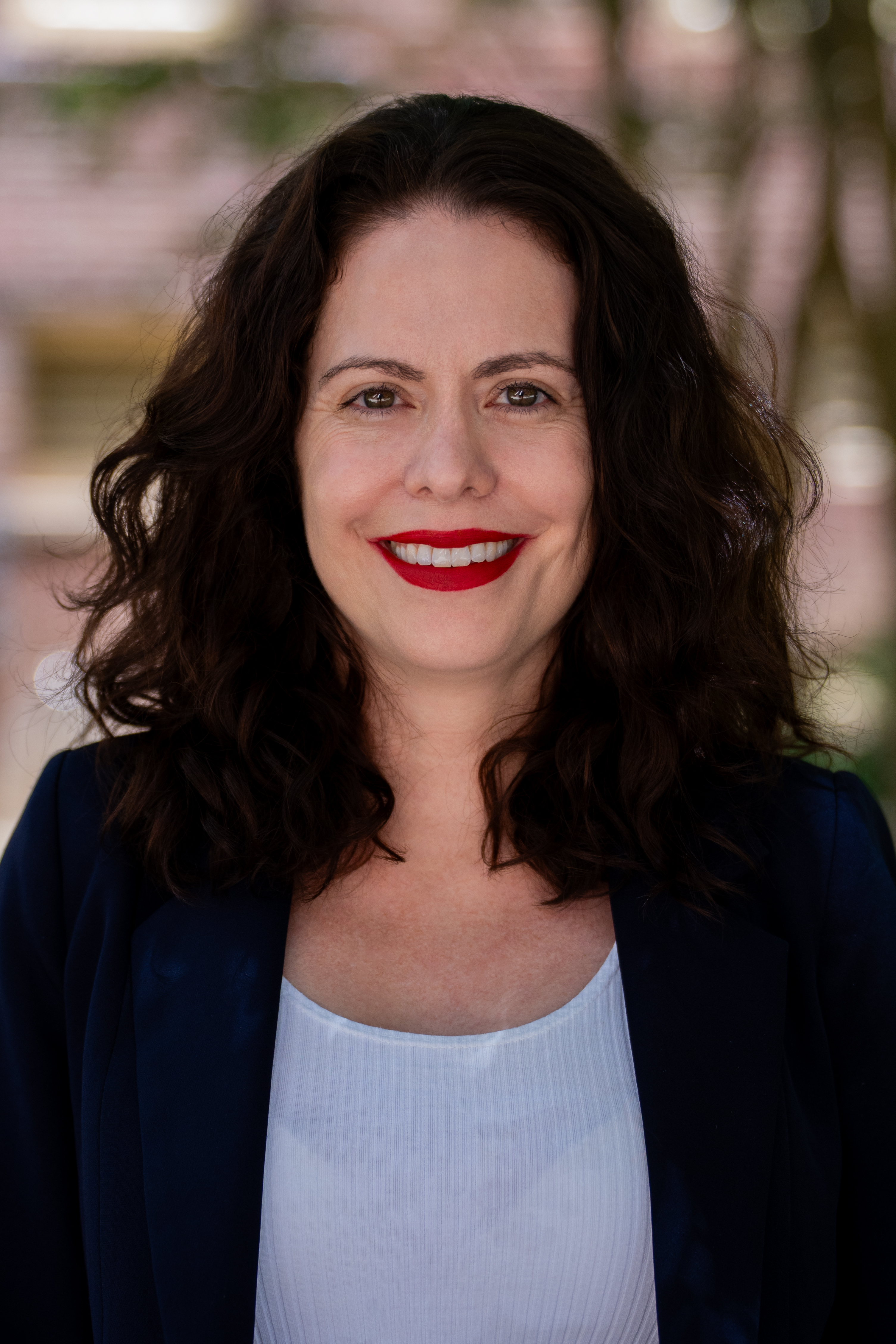
Research Mentor: Dr. Lidiana de Moraes, she/her
Department, College, Affiliation: Honors Program, Undergraduate Studies
Contact Email: lidiana.demoraes@fsu.edu
Research Assistant Supervisor (if different from mentor):
Research Assistant Supervisor Email:
Faculty Collaborators:
Faculty Collaborators Email:
Department, College, Affiliation: Honors Program, Undergraduate Studies
Contact Email: lidiana.demoraes@fsu.edu
Research Assistant Supervisor (if different from mentor):
Research Assistant Supervisor Email:
Faculty Collaborators:
Faculty Collaborators Email:
Looking for Research Assistants: Yes
Number of Research Assistants: 2
Relevant Majors: Open to all majors. Especially relevant: History, International Affairs, Latin American & Caribbean Studies, Sport Management, Women's/Gender Studies — but no specific major required. Portuguese reading proficiency is helpful (not required) for the Brazil track only; no language requirement for the U.S. track.
Project Location: On FSU Main Campus
Research Assistant Transportation Required: No, the project is remote Remote or In-person: Partially Remote
Approximate Weekly Hours: 8 hours, Flexible schedule (Combination of business and outside of business. TBD between student and research mentor.)
Roundtable Times and Zoom Link:
Number of Research Assistants: 2
Relevant Majors: Open to all majors. Especially relevant: History, International Affairs, Latin American & Caribbean Studies, Sport Management, Women's/Gender Studies — but no specific major required. Portuguese reading proficiency is helpful (not required) for the Brazil track only; no language requirement for the U.S. track.
Project Location: On FSU Main Campus
Research Assistant Transportation Required: No, the project is remote Remote or In-person: Partially Remote
Approximate Weekly Hours: 8 hours, Flexible schedule (Combination of business and outside of business. TBD between student and research mentor.)
Roundtable Times and Zoom Link:
- Day: Tuesday, September 1
Start Time: 12:00
End Time: 12:30
Zoom Link: https://fsu.zoom.us/j/92284757234 - Day: Wednesday, September 2
Start Time: 12:00
End Time: 12:30
Zoom Link: https://fsu.zoom.us/j/92284757234
Project Description
This project investigates the institutional foundations of women's soccer in Brazil and the United States during the 1970s and 1980s, a formative period in the development of both countries' contemporary systems. In Brazil, a 1941 decree banning women from football—deemed "incompatible with their nature"—remained in force until 1979; how it was enforced, circumvented, and eventually repealed has not been closely studied. In the United States, the same period saw the early implementation of Title IX (1972), the expansion of NCAA women's soccer programs, and the formation of the first U.S. women's national team (1985).Drawing on two parallel archival streams — Brazilian newspaper and federation records on one side, U.S. collegiate, federation, and press archives on the other — this research traces how each country built its own institutional pathway. Comparing the two models reveals how different approaches to gender and opportunity produced different outcomes.
Undergraduate researchers will contribute to archival research, literature reviews, source collection and organization, and the development of a comparative digital research database. The project is expected to contribute to conference presentations, peer-reviewed publications, and the development of a broader comparative research agenda on the history of women's soccer in the Americas.
Research Tasks: Brazil track — literature review of Brazilian sports policy under the Estado Novo and military dictatorship; search and catalogue primary sources (newspaper archives, sports federation bulletins) on the 1941 ban's enforcement and 1979 repeal; build a chronological timeline of legislative/institutional milestones, 1941–1979.
U.S. track — literature review of Title IX's early implementation in women's collegiate athletics; search and catalogue primary sources (NCAA archives, U.S. Soccer Federation records, newspaper archives) on the growth of women's soccer programs and the 1985 national team's formation; build a chronological timeline of legislative/institutional milestones, 1972–1991.
Shared — organize findings into structured spreadsheets; participate in biweekly comparative discussions connecting the two tracks; assist with citation management and an annotated bibliography.
Skills that research assistant(s) may need: Required — strong written English communication; strong organizational skills and attention to detail; ability to work independently on a set timeline; interest in Latin American history, U.S. sports history, gender studies, or sport management.
Recommended — for the Brazil track, reading proficiency in Portuguese (training in archival methods provided regardless of language);
No prior archival experience necessary.
Mentoring Philosophy
My mentoring philosophy holds that undergraduate researchers should be collaborators in the making, not simply assistants completing assigned tasks. I start by learning each student's interests and goals — whether they hope to strengthen their writing, gain research experience, or explore graduate school — so the experience helps them grow alongside the project.I approach research training as a process of guided independence. I model a task first, then we work through it together, and students gradually take ownership, with regular feedback and reflection. I encourage questions, experimentation, and even mistakes, because rethinking an approach is as valuable as getting it right the first time. I share my own research process, including its dead ends, so students see that scholarship is iterative and collaborative.
Because this project is comparative, I also encourage students to learn from one another. Each researcher focuses on one national context while joining regular discussions connecting their findings to broader comparative questions. My goal is to teach students not just to gather evidence, but to recognize patterns and build arguments from it.
Above all, I strive to create a mentoring environment built on curiosity, respect, and intellectual confidence. This project engages histories of exclusion and institutional power, and I want students to feel comfortable engaging critically with it, knowing their perspectives are valued. By the end of the experience, I hope each student leaves with new research skills and the confidence to see themselves as capable contributors to academic knowledge.
Additional Information
This project is connected to an in-progress panel proposal for the 2027 Latin American Studies Association (LASA) Congress, allowing students to see their research contribute to a real academic conference. I welcome students interested in continuing this research beyond the UROP year. No knowledge of Portuguese is required to apply. Students without Portuguese may still contribute to the Brazil track using translation tools for initial cataloguing tasks, with proficiency recommended for closer archival work.DO YOU WANT MORE INFORMATION? Check here: https://fsu-my.sharepoint.com/:b:/g/personal/ld25k_fsu_edu/IQBGGCBY1oSeRLkEMd4xiCpTAXJjrJGNMzOJCHlW-VQZ2TM?e=TeRJat