
UROP Project
Mathematical and Computational Oncology
mathematical oncology, differential equations, stochastic processes, optimal control, cancer modeling, applied mathematics
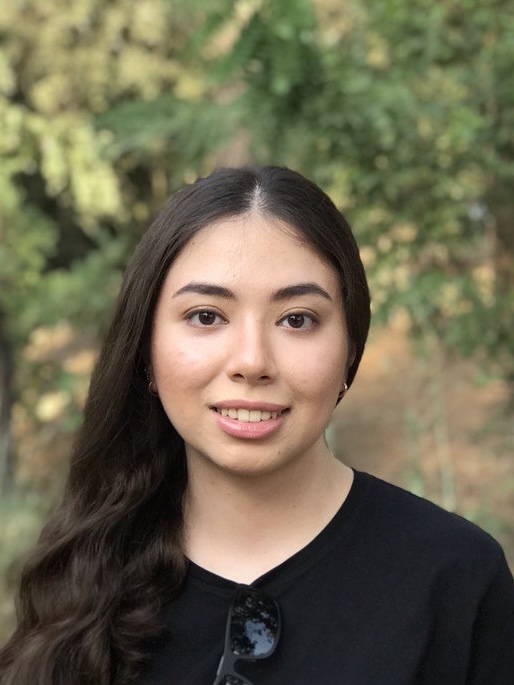
Research Mentor: Nazanin Naghdalizadeh Mokari,
Department, College, Affiliation: Department of Mathematics, Arts and Sciences
Contact Email: nn23g@fsu.edu
Research Assistant Supervisor (if different from mentor):
Research Assistant Supervisor Email:
Faculty Collaborators: Prof Nishan Mudalige
Faculty Collaborators Email: nishan.mudalige@utoronto.ca
Department, College, Affiliation: Department of Mathematics, Arts and Sciences
Contact Email: nn23g@fsu.edu
Research Assistant Supervisor (if different from mentor):
Research Assistant Supervisor Email:
Faculty Collaborators: Prof Nishan Mudalige
Faculty Collaborators Email: nishan.mudalige@utoronto.ca
Looking for Research Assistants: Yes
Number of Research Assistants: 1
Relevant Majors: Open to all majors; Mathematics, Applied Mathematics, Statistics, Computer Science, Biology, and Medical/Pre-Health majors are preferred.
Project Location: On FSU Main Campus
Research Assistant Transportation Required: Remote or In-person: In-person
Approximate Weekly Hours: 5–10, Flexible schedule (Combination of business and outside of business. TBD between student and research mentor.)
Roundtable Times and Zoom Link:
Number of Research Assistants: 1
Relevant Majors: Open to all majors; Mathematics, Applied Mathematics, Statistics, Computer Science, Biology, and Medical/Pre-Health majors are preferred.
Project Location: On FSU Main Campus
Research Assistant Transportation Required: Remote or In-person: In-person
Approximate Weekly Hours: 5–10, Flexible schedule (Combination of business and outside of business. TBD between student and research mentor.)
Roundtable Times and Zoom Link:
- Day: Tuesday, September 1
Start Time: 1:00
End Time: 2:00
Zoom Link: https://fsu.zoom.us/j/99578685639 - Day: Thursday, September 3
Start Time: 1:00
End Time: 2:00
Zoom Link: https://fsu.zoom.us/j/99578685639
Project Description
This project develops an open-access undergraduate course in mathematical and computational oncology, similar to the e-book An Introduction to Mathematical Epidemiology (a prior UTM–FSU–Maclay collaboration involving Prof. Mudalige and Prof. Morsky). Rather than a single research project, the deliverable is an educational resource: a structured, example-driven course covering three chapters including, differential equation models of tumor growth and tumor–immune dynamics, stochastic processes in cancer cell populations, and optimal control theory applied to treatment scheduling. The student will learn each topic under the supervision of the mentoring team, then help collect text, worked examples, code, and figures for the corresponding chapter. The expected outcome is at least one e-book chapter and a poster presentation; if scope and the student's preference allow, this may extend to a paper. In the fall, the student develops a complete draft of Chapters 1–3 (text, worked examples, code) with the mentoring team. If the student remains interested in the spring, they move into a mentored project applying course material to an original question, culminating in either a poster or a paper depending on scope and preference.Research Tasks: Reading and problem sets on ODE modeling, stability/bifurcation analysis, stochastic processes, and optimal control theory
Collecting text, worked examples, code, and figures for course chapters
(Spring, continuing if student interested) a research project using book culminating in a poster or paper
Skills that research assistant(s) may need: Required: basic differentiation
Recommended: introductory Python or willingness to learn; background knowledge in biology and medicine is beneficial, but not required
Mentoring Philosophy
My approach starts by identifying what a student wants to get out of the experience, whether that's research skills, a stronger foundation in applied math, or exposure to what a research career looks like, and building the project around that. I aim to give students real ownership of their piece of the work rather than treating them as an extra pair of hands: they contribute actual course content, not just background tasks. I check in regularly, adjust the pace and depth to the student's background, and try to create an environment where getting stuck or being wrong is a normal, expected part of the process rather than something to avoid.Additional Information
This is an example of e-book that have been done before;https://nishanmudalige.github.io/UTM_FSU_Biostats/