
UROP Project
Explainable Artificial Intelligence for Traffic Volume Prediction
Artificial Intelligence, Transportation, Machine Learning, Traffic Modelling
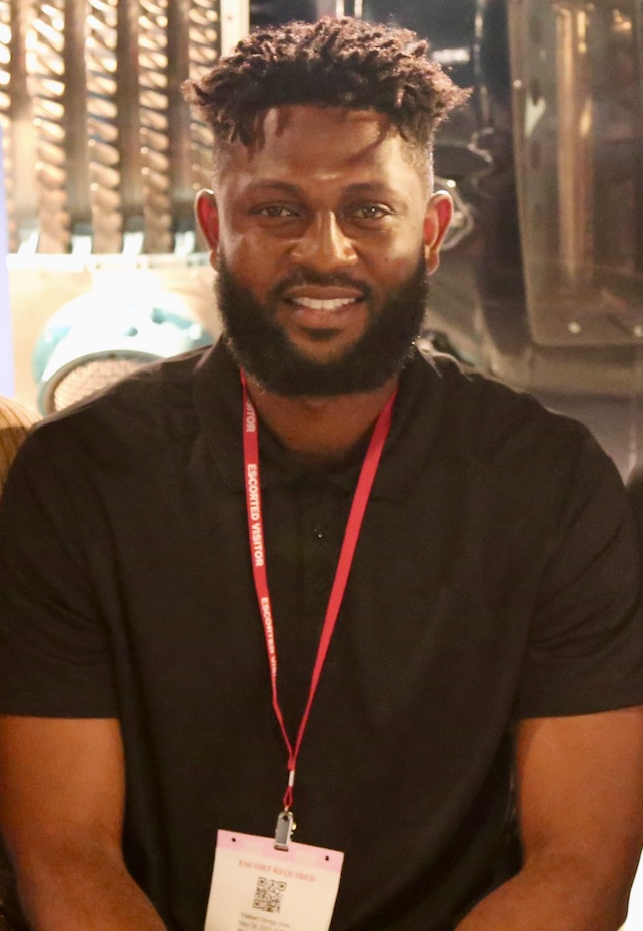
Research Mentor: George Amu,
Department, College, Affiliation: Industrial and Manufacturing Engineering, FAMU-FSU College of Engineering
Contact Email: gka24a@fsu.edu
Research Assistant Supervisor (if different from mentor):
Research Assistant Supervisor Email:
Faculty Collaborators: Arda Vanli Dr.
Faculty Collaborators Email:
Department, College, Affiliation: Industrial and Manufacturing Engineering, FAMU-FSU College of Engineering
Contact Email: gka24a@fsu.edu
Research Assistant Supervisor (if different from mentor):
Research Assistant Supervisor Email:
Faculty Collaborators: Arda Vanli Dr.
Faculty Collaborators Email:
Looking for Research Assistants: Yes
Number of Research Assistants: 1
Relevant Majors: Open to all majors
Project Location: On FSU Main Campus
Research Assistant Transportation Required: Remote or In-person: In-person
Approximate Weekly Hours: 10, Flexible schedule (Combination of business and outside of business. TBD between student and research mentor.)
Roundtable Times and Zoom Link:
Number of Research Assistants: 1
Relevant Majors: Open to all majors
Project Location: On FSU Main Campus
Research Assistant Transportation Required: Remote or In-person: In-person
Approximate Weekly Hours: 10, Flexible schedule (Combination of business and outside of business. TBD between student and research mentor.)
Roundtable Times and Zoom Link:
- Day: Tuesday, September 1
Start Time: 4:30
End Time: 5:00
Zoom Link: https://drive.google.com/file/d/1T-feehnehr-3FOY5bEJ_yrMtqseVlxY1/view?usp=drive_link - Day: Wednesday, September 2
Start Time: 4:30
End Time: 5:00
Zoom Link: https://drive.google.com/file/d/1T-feehnehr-3FOY5bEJ_yrMtqseVlxY1/view?usp=drive_link - Day: Thursday, September 3
Start Time: 4:30
End Time: 5:00
Zoom Link: https://drive.google.com/file/d/1T-feehnehr-3FOY5bEJ_yrMtqseVlxY1/view?usp=drive_link
Project Description
BackgroundState departments and agencies monitor traffic volumes to manage and maintain efficient highway systems. Traffic data collected are used for various applications including risk assessments to identify high crash locations as well as resource allocation, maintenance planning, and policy formulation.
Research Problem
Traffic data collection requires significant time and effort. Current manual methods used for data collection are insufficient and do not cover all road segments. Currently, in Florida, the department of transport uses manual ground-based methods to count traffic on some major roadways. There is still a substantial gap in data collection in terms of coverage. Artificial intelligence (AI) and statistical computing offer significant potential in providing robust and cost-effective traffic volume data for these unmonitored road segments.
Research Objectives
This research will focus on:
1. Reviewing existing literature and identifying best practices for traffic volume prediction.
2. Building predictive artificial intelligence models for traffic volume prediction on unmonitored roadways in Florida.
Methodology
The project will focus on traffic volume prediction for selected districts in Florida. The proposed methodology will include traffic demand modelling and machine learning. The designed model will be evaluated based on defined metrices to ascertain its robustness.
Expected Outcomes
This research is expected to result in defined tested strategies and recommendations for predicting traffic volumes using artificial intelligence.
Research Tasks: 1. Reviewing existing literature and identifying best practices for traffic volume prediction.
2. Building predictive artificial intelligence models for traffic volume prediction on unmonitored roadways in Florida.
Methodology
Skills that research assistant(s) may need: Data analytics - recommended
Mentoring Philosophy
Developing a relationship founded on mutual respectGiving mentees’ ownership of their work and promoting accountability
Sharing your own experience.
Creating a safe environment in which mentees feel that is acceptable to fail and learn from their mistakes