
UROP Project
Developing AI Literacy Through Prompt Engineering in High School Computer Science Education
Prompt Engineering, Digital Competencies, K-12 Education, Secondary School Computer Science, Advanced Coding Class, High School Computing, Laboratory School Context, Generative AI (GenAI), Custom AI Agents, Gemini Gems, AI Coding Assistant
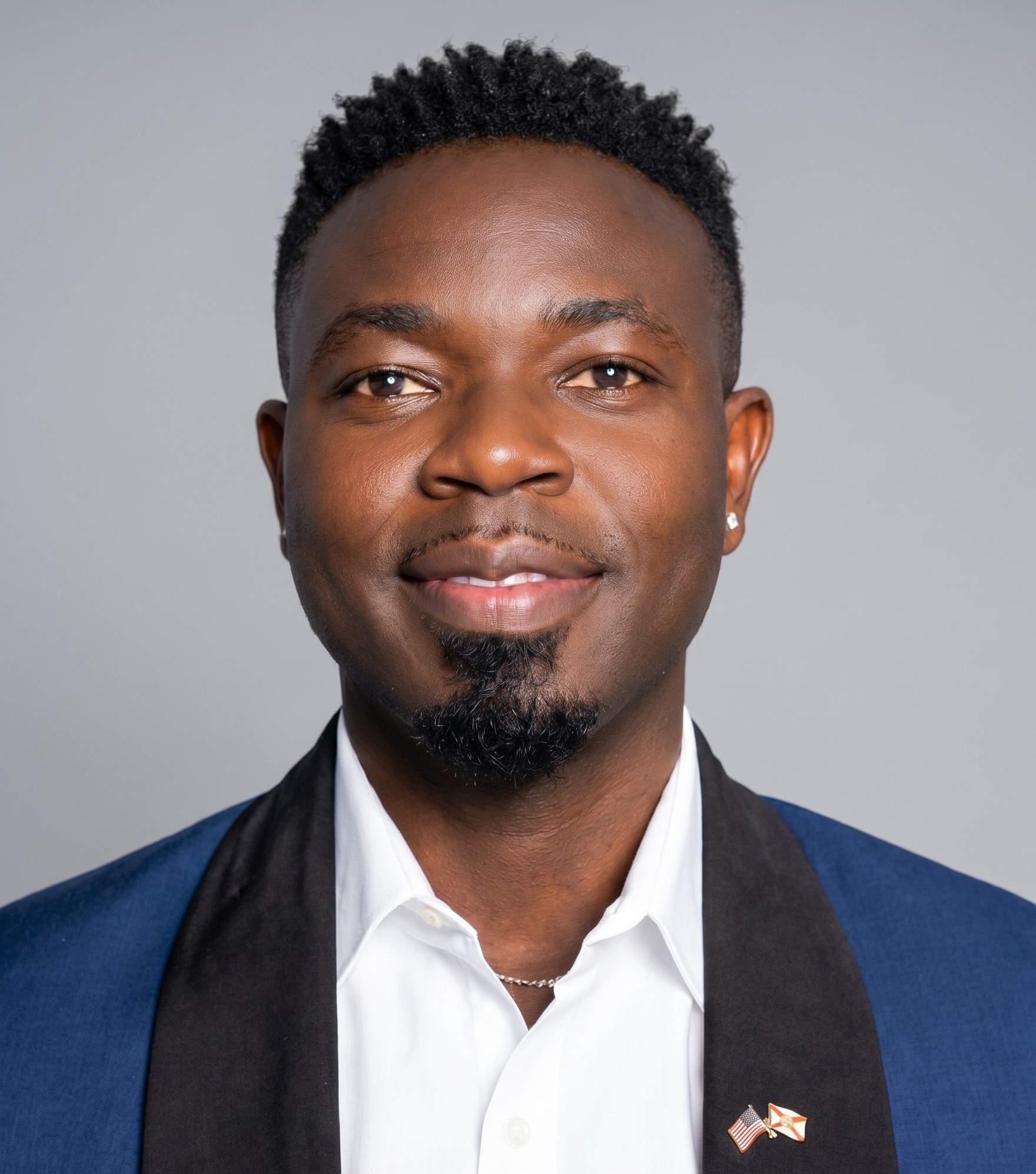
Research Mentor: Damilare Ajayi, he/him/his
Department, College, Affiliation: Educational Psychology & Learning Systems, Education, Health, and Human Sciences
Contact Email: dfa24@fsu.edu
Research Assistant Supervisor (if different from mentor):
Research Assistant Supervisor Email:
Faculty Collaborators:
Faculty Collaborators Email:
Department, College, Affiliation: Educational Psychology & Learning Systems, Education, Health, and Human Sciences
Contact Email: dfa24@fsu.edu
Research Assistant Supervisor (if different from mentor):
Research Assistant Supervisor Email:
Faculty Collaborators:
Faculty Collaborators Email:
Looking for Research Assistants: Yes
Number of Research Assistants: 2
Relevant Majors: Artificial Intelligence
Education
Computer Science
Project Location: On FSU Main Campus
Research Assistant Transportation Required: Remote or In-person: Fully Remote
Approximate Weekly Hours: 3-5 hours, Flexible schedule (Combination of business and outside of business. TBD between student and research mentor.)
Roundtable Times and Zoom Link:
Number of Research Assistants: 2
Relevant Majors: Artificial Intelligence
Education
Computer Science
Project Location: On FSU Main Campus
Research Assistant Transportation Required: Remote or In-person: Fully Remote
Approximate Weekly Hours: 3-5 hours, Flexible schedule (Combination of business and outside of business. TBD between student and research mentor.)
Roundtable Times and Zoom Link:
- Day: Thursday, September 3
Start Time: 1:00
End Time: 1:30
Zoom Link: https://fsu.zoom.us/my/damilare?omn=93417216980
Project Description
This qualitative case study, situated within a Research-Practice Partnership (RPP) at Florida State University Schools (FSUS), investigates the development of AI literacy and prompt engineering skills among high school Computer Science students (specifically in advanced Level 4 Game & Sim classes). As students engage in project-based learning to build games using C# and the Unity engine, they collaborate with Generative AI (GenAI) technologies, utilizing general AI coding assistants (such as ChatGPT and Gemini) as well as customized AI Agents/Gems. Grounded in the AI literacy framework (Long & Magerko, 2020), this research explores how structured, teacher-led prompt engineering instruction, iterative student-AI communication, and systematic prompt logging influence students' computational thinking, critical code evaluation strategies, and overall development of AI literacy.Research Tasks: Literature review
Data analysis
Skills that research assistant(s) may need: Curiosity
Data Cleaning
Basic Ai experience
reliability and professionalism
Mentoring Philosophy
My approach to mentoring is grounded in one simple belief: people grow best when they feel seen, trusted, and challenged in equal measure. I lead by doing. When I work with mentees, I am not standing at a distance giving instructions, I work alongside with them, modeling the curiosity, rigor, and adaptability I hope they develop.I start by getting to know each mentee as a person. Their goals, their strengths, what excites them, what holds them back. From there, I try to build an environment where they feel safe to take risks, ask questions, and yes, make mistakes, because mistakes are where the real learning happens. I do not micromanage. I set clear expectations, then step back and let mentees own their work. Ownership is how confidence gets built.
Kindness is not separate from professionalism in my mentoring relationships — it is the foundation of them. I believe mentees do their best thinking when they feel respected, not evaluated. So I hold high standards while also being flexible enough to meet people where they are. Every mentee comes with a different set of experiences, and my job is to recognize what makes each person uniquely capable and help them build on it.
Ultimately, I want mentees to leave our work together not just with stronger research skills, but with a clearer sense of who they are as thinkers and contributors.