
Research Symposium
26th annual Undergraduate Research Symposium, April 1, 2026
Ashley Olah Poster Session 2: 10:45 am - 11:45 am / Poster #152
BIO
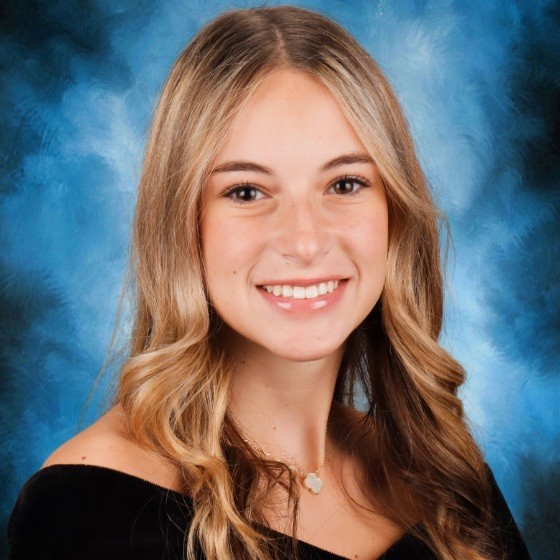
Ashley Olah is a first year student pursuing her bachelors degree in psychology. She was a part of AP research her senior year of high school in which she studied how TikTok affects the attention spans of college preparatory students. This inspired her to take part in the UROP program to continue working in research. After undergrad she hopes to pursue a career in law.
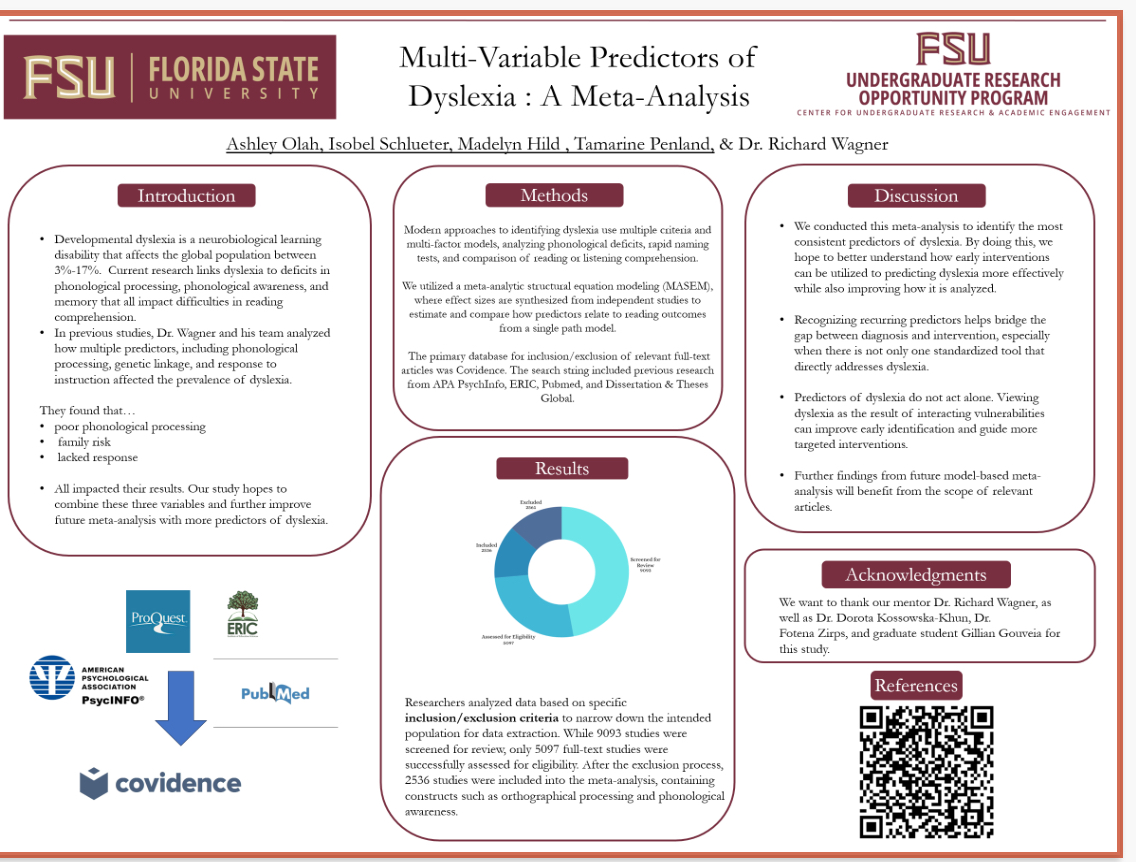
Multi- Variable Predictors of Dyslexia: A Meta- Analysis
Authors: Ashley Olah , Richard WagnerStudent Major: Psychology
Mentor: Richard Wagner
Mentor's Department: Psychology Mentor's College: Arts and Sciences Co-Presenters: Isobel Schlueter, Madelyn Hild, Tamarind Penland
Abstract
Our goal is to discover why it's important to know the predictors of dyslexia. There are many reasons why dyslexia occurs and understanding the predictors can help us prevent and treat it. This is important since dyslexia is an everyday struggle and if we can help treat and prevent it early on, those with this condition can have an easier way of life. To do this we conducted a model based meta analysis. A model based meta analysis is a technique that pulls from many different articles to see the multiple causes a disorder can have. To do this we first downloaded articles to covidence. Then we screened the articles just based on the title and abstract. We then moved to full text review where we used specific inclusion and exclusion criteria. Then, we will extract the data and code it. Currently we do not have results. However, in terms of our screening we have analyzed 15910 articles and included 1647 in our study. In a previous study it was found that if dyslexia was found in the early ages it could be treated. Also some factors that turned out to be predictor of dyslexia were phonological awareness, rapid naming, oral vocabulary, and word reading fluency. This is important because the earlier we can detect dyslexia the more likely we are to be able to prevent it. Future research could look at ways to treat it when those with dyslexia grow up and focus on reduction not predictors.
Keywords: Dyslexia, Meta- Analysis, Dyslexia Predictors